
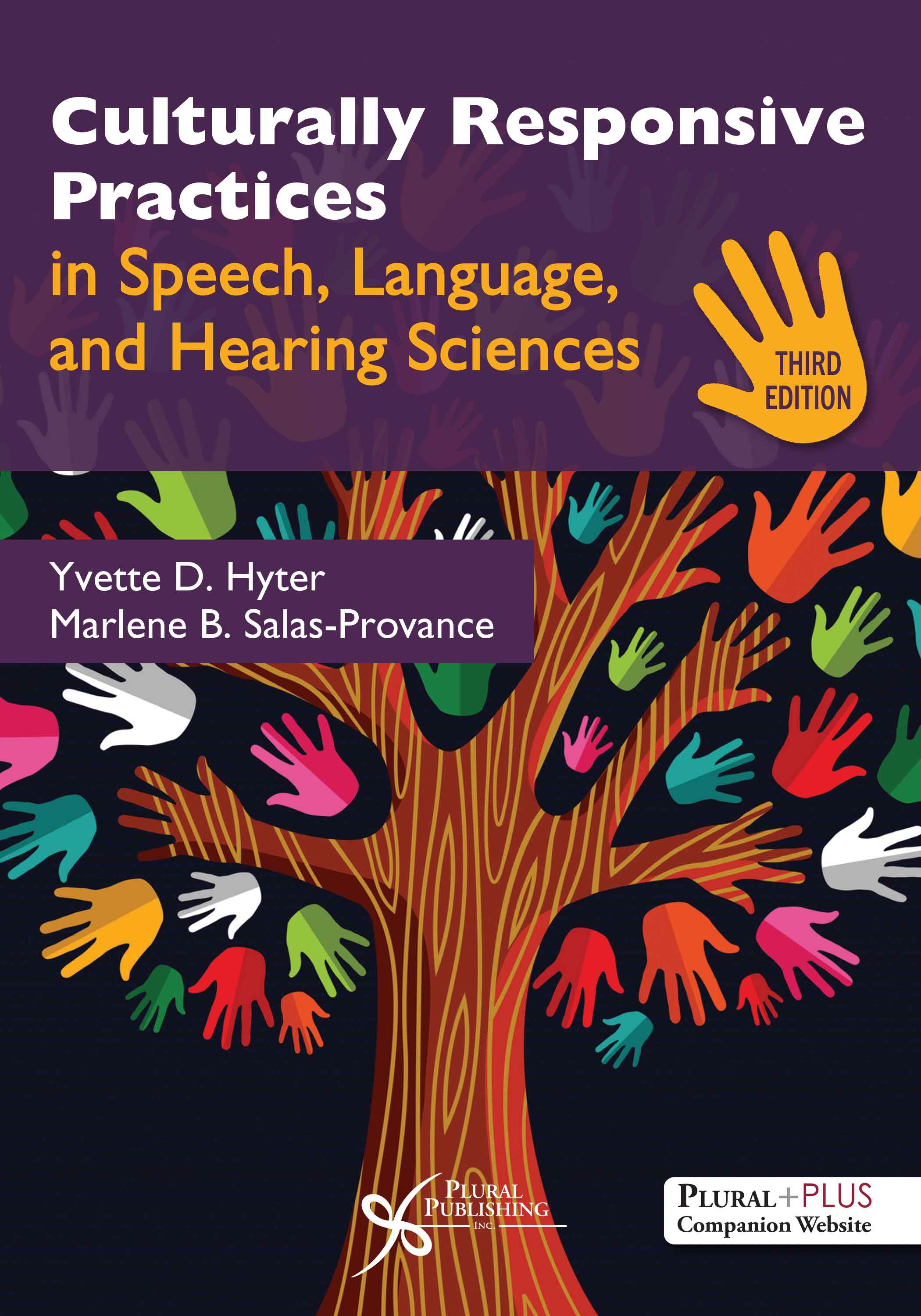
Culturally Responsive Practices in Speech, Language, and Hearing Sciences
Third Edition
Yvette D. Hyter, Marlene B. Salas-Provance
Details: 431 pages, B&W, Softcover, 7" x 10"
ISBN13: 978-1-63550-733-1
© 2027 | Available
For Instructors
Purchase
The Most Adopted Text for Courses on Cultural and Linguistic Diversity!
Culturally Responsive Practices in Speech, Language, and Hearing Sciences, Third Edition provides an innovative perspective on cultural responsiveness in the field of communication sciences and disorders. It is imperative for clinicians and scientists to be aware of diverse aspects of globalization: how these aspects may affect their own knowledge, strengths, biases, and interventions, as well as the partnerships they build with communities, families, and individuals in their care. The purpose of this essential textbook is to facilitate the creation of knowledge and the development of attitudes and skills that lead to culturally responsive practices.
Authored by two leading scholars in the field, Yvette D. Hyter, PhD, CCC-SLP, BCS-CL, ASHA Fellow, and ASHA Honors, and Marlene B. Salas-Provance, PhD, MHA, CCC-SLP, FNAP, and ASHA Fellow, the text presents conceptual frameworks to guide readers toward cultural responsiveness by becoming critically engaged users of culturally responsive and globally sustainable practices. The text is focused on speech, language, and hearing, but also draws from theoretical frameworks in other disciplines for an interprofessional, transdisciplinary, and macro-practice perspective. This information will help speech-language pathology and audiology students and professionals build their own conceptual framework for providing culturally and linguistically responsive services and engaging with others globally.
New to the Third Edition
- Chapters have been reorganized and edited for improved flow, conciseness, readability, and comprehension
- Updates throughout to reflect the current state of research
- More examples from the audiology perspective, and new information on disability justice, crip linguistics, raciolinguistics, translanguaging, and languaging
- Material in Chapter 4 (Culturally Responsive Practices: Human Rights, Equity, Inclusion, and Social Justice) and Chapter 6 (Culture and Hearing) has been updated and expanded
- A revised chapter on Culturally Responsive Assessment (Chapter 7) now includes ethnographic interviewing
- Suggestions for readings, reflections, and activities are highlighted with new icons throughout
- New “Bonus Brilliance!” section outlining literature that should not be missed
Key Features
- Numerous case studies to facilitate knowledge and skills
- Journal prompts and discussion questions that challenge individuals to use critical and dialectical thinking
- Real-life activities that can be completed inside or outside the classroom or therapeutic setting
- Suggested readings from the current literature in cultural and linguistic responsiveness, as well as global engagement, in order to build expertise and influence student attitudes
- An expanded PluralPlus companion website now includes additional guidance for using the ancillary resources
PluralPlus Online Ancillaries
For instructors: PowerPoint Slides, Class Activities
For students: eFlashcards, Activities/Exercises, Study Guides
Contents
Preface
Acknowledgments
Reviewers
Chapter 1. Introduction
Definition of Culture
Cultural Responsiveness
Opportunities for Reflection
Unconscious Bias
Building Blocks of This Textbook
References
Chapter 2. Concepts and Definitions
Learning Objectives
Key Concepts
The Contexts That Give Meaning to Culture and Cultural Responsiveness
Globalization and Its Multidimensional Effects
Changing Demographics Around the World
Health Disparities and the Goal of Health Equity
World Health Organization’s International Classification of Functioning Disability and Health
World Report on Disability
Defining Concepts
Essential Concepts and Their Definitions
Chapter Summary
Discovering Your Cultural Being
Bonus Brilliance!
References
Chapter 3. Frameworks for Culturally Responsive Practices
Learning Objectives
Key Concepts
Over-the-Counter Hearing Aids—A Problem or a Solution?
Theory and Social Theory
Three Theoretical Paradigms
Components of a Theory
Conceptual Frameworks
Positivism
Interpretivism
Critical Paradigm
Perceptions of Illness, Disease, and Disability
The Tip of the Iceberg
Dimensions of Culture
Power Distance
Uncertainty Avoidance
Individualism–Collectivism
Masculinity–Femininity
Long-term–Short-Term Orientation
Indulgence–Restraint
Disability Frameworks
Other Critical Frameworks to Consider
Non-Western Frameworks
Frameworks From Speech, Language, and Hearing Sciences
The VISION Model
Proposed Pedagogical Frameworks
Salas-Provance’s (2021) Cultural Growth Profile Model
Hyter’s Conceptual Framework for Responsive and Sustainable Engagement
Chapter Summary
Bonus Brilliance!
References
Chapter 4. Culturally Responsive Practices: Human Rights, Equity, Inclusion, and Social Justice
Learning Objectives
Key Concepts
Cultural Responsiveness Using a Human Rights Approach
Cultural Responsiveness Through a Social Justice Lens
Disability and Linguistic Justice
Equity
Inclusion
Intersectionality
Power
Physical Violence
Structural Violence
Symbolic Violence
Manufactured Consent
Privilege
Organization of Work
Macroaggressions and Microaggressions
Microinterventions
Macrointerventions
Chapter Summary
Bonus Brilliance!
References
Chapter 5. Culture and Language
Learning Objectives
Key Concepts
Communication, Language, Languaging, and Translanguaging
Communication
Language, Languaging, and Translanguaging
Language Variation
Multilingualism
Second Language Considerations
Networks and Communities
Social Networks
Communities of Practice
The Politics of Language
Language Politics
Linguistic Culture and Language Policy
Chapter Summary
Bonus Brilliance!
References
Chapter 6. Culture and Hearing
Learning Objectives
Key Concepts
Rates of Hearing Loss and Causes of Hearing Difference
Social Determinants of Hearing Health
Assessment and Intervention
Considerations for Assessment
Considerations for Intervention
Deaf Culture
Bilingualism
Black American Sign Language
Models of Cultural Beliefs
Explanatory Models
Chapter Summary
Bonus Brilliance!
References
Chapter 7. Culturally Responsive Assessment
Learning Objectives
Key Concepts
Culturally Responsive Assessment Practices
Appropriate Assessment Practices, Measures, and Tools
Interview Protocol
Cultural Aspect of Time in Assessment
Alternative Assessment Procedures
Modifying Norm-Referenced Tests
Dynamic Assessment
Developing a New Screening or Assessment Measure
Speech-Sound Assessment
Articulation and Phonological Assessment in the First Language
Language Variation
Culturally Responsive Practices in the Areas of Fluency, Voice, Resonance, and Swallowing
Fluency
Voice
Resonance
Swallowing
Counseling
Chapter Summary
Bonus Brilliance!
References
Chapter 8. Culturally Responsive Intervention
Learning Objectives
Key Concepts
Culturally Responsive Intervention
Services to Bilingual Clients
Intervention Services for Children Who Speak Language Variations With Language Disabilities
Intervention Strategies for Adults From Various Cultural and Linguistic Backgrounds With Language Disabilities
Intervention Strategies for Children With Speech-Sound Disabilities
Intervention Strategies for People Who Stutter
Intervention Strategies for People With Voice Disabilities
Intervention Strategies for People With Cleft Lip and Palate
Swallowing Disabilities
Telepractice
Chapter Summary
Bonus Brilliance!
References
Chapter 9. Working With Interpreters
Learning Objectives
Key Concepts
Defining “Interpreter”
The Need for an Interpreter
Responsibilities of the Interpreter
Skills of the Interpreter
BID Interpreting Process
Risk Inherent in the Interpreting Process
Chapter Summary
Bonus Brilliance!
References
Chapter 10. Culturally Responsive Research
Learning Objectives
Key Concepts
“Whose Reality and Knowledge Is It Anyway?”
History of Research With Communities of Color and With Scientific Racism and Ableism
Culturally Responsive Research (CRR)
The Necessity of CRR
Research Compliance
Engaging in CRR
Skills of CRR Investigators
Begin With a Theoretical Framework
Critical Consciousness
Political Consciousness
Sociocultural Approach
Biopsychosocial Model
Social Theory of Transformation (Praxis)
Researcher Team
Criteria for Inclusion/Exclusion of Research Participants
Research Purpose and Research Questions
Imagine
Chapter Summary
Bonus Brilliance!
References
Chapter 11. Global Engagement, Sustainability, and Culturally Responsive Practices
Learning Objectives
Key Concepts
Movement of People Around the World
International Documents, Guidelines, and Policies
UN Convention on the Rights of Persons with Disabilities
UN Millennium Development Goals (2000–2015)
UN Sustainable Development Goals (2015–2030)
World Report on Disability and the Disability Development Report
International Clinical Practice of Audiologists and Speech-Language Clinicians
International Audiology Service-Learning
Building Resource Capacity in Uganda
A Human Rights Approach to SLHP Services
“Voluntourism” or Effective Volunteering?
Sustainable Practice
Chapter Summary
Bonus Brilliance!
References
Index
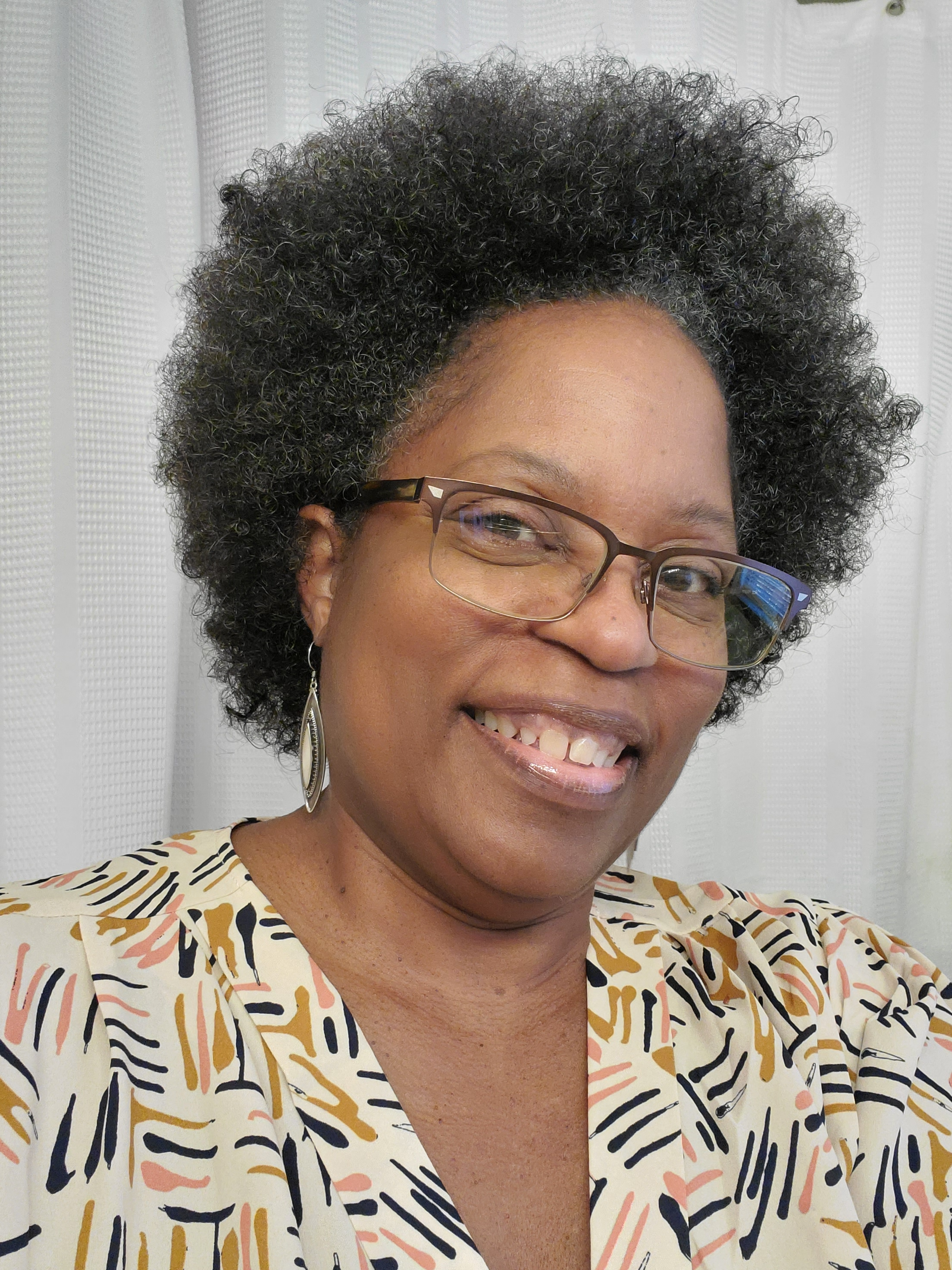
Yvette D. Hyter
Yvette D. Hyter, PhD, CCC-SLP, BCS-CL, ASHA Fellow, ASHA Honors, is Professor Emerita of Speech, Language, and Hearing Sciences at Western Michigan University in Kalamazoo. Dr. Hyter focuses on the influences of culture on communication development with emphasis in social pragmatic communication in children who speak African American Language and children with histories of maltreatment. She developed a social pragmatic communication assessment battery for young children. Dr. Hyter has expertise in culturally responsive and globally sustainable practices; and co-teaches study-abroad courses for students and community members in West Africa and the U.S. Midwest focusing on the causes and consequences of globalization on systems, policies, and practices. She has published articles underscoring the need for conceptual frameworks guiding practice in equitable, culturally responsive, trauma-responsive, and globally sustainable ways; and served in national and international leadership positions regarding global practice, equity, diversity, and inclusion. Currently Dr. Hyter is the owner of Language and Literacy Practices, LLC., through which she teaches courses and provides culturally and linguistically responsive and trauma-responsive assessments, interventions, and educational consultations in the United States and around the world. She has edited Language Research in Post-Traumatic Stress through Routledge, authored Trauma-Responsive Speech-Language Therapy for Children (in press) with Plural Publishing, and is one of the founders of the Journal of Critical Study of Communication & Disability, which infuses equity, intersectionality, and social justice into education, research, clinical practice, and policies employing critical science approaches.
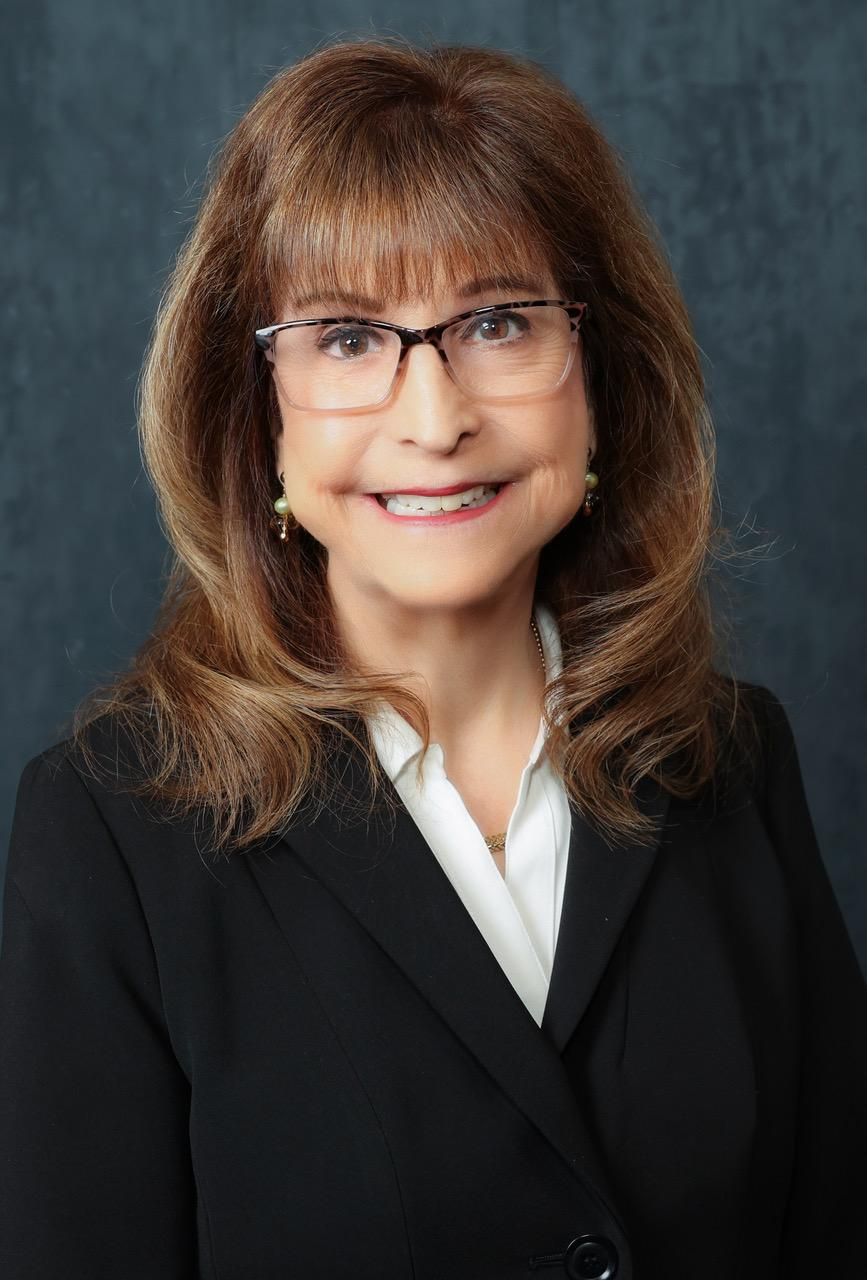
Marlene B. Salas-Provance
Marlene B. Salas-Provance, PhD, MHA, CCC-SLP, FNAP, ASHA Fellow, is Professor and Vice Dean at the Arizona School of Health Sciences at A.T. Still University. Dr. Salas-Provance is a member of ASHA’s Board of Directors, Vice President for Planning (2026– 2029). She received ASHA’s Certificate of Recognition for Special Contributions in Multicultural Affairs and ASHA’s Certificate of Recognition for Outstanding Contributions in International Achievement. Dr. Salas-Provance is past Coordinator of ASHA’s Special Interest Group 14, Communication Disorders and Sciences in CLD Populations; past President of the Hispanic Caucus; was a founding steering committee member and coordinator of ASHA’s Special Interest Group 17, Global Issues in Communication Sciences and Related Disorders; and past member of ASHA’s Multicultural Issues Board. She is President and CEO of Bilingual Advantage, Inc., a cultural competence and bilingual medical interpreter training company for professionals across all healthcare disciplines. Dr. Salas-Provance has traveled to nine countries with an international medical team providing speech and language services to children with cleft lip and palate. The interprofessional practice team has included medical professionals such as surgeons, orthodontists, pediatricians, families, community members, and in-country university faculty and students. She has led teams of graduate students and faculty to provide bilingual clinical services in Lima, Peru and Cebu City, Philippines while building sustainable services. Dr. Salas-Provance provides telepractice international opportunities for university students in her craniofacial graduate course.
Culturally Responsive Practices in Speech, Language, and Hearing Sciences, Third Edition comes with access to supplementary resources on a PluralPlus companion website.
The companion website is located at: https://www.pluralpublishing.com/publication/CRPSLHS3E
STUDENTS:
The student resources include eFlashcards, Activities/Exercises, and Study Guides.
To access the student resources, you must register on the companion website and log in using the access code located in the front of your textbook.
INSTRUCTORS:
The instructor resources include PowerPoint Slides and Class Activities. You will also have access to all of the student resources listed above.
To access the instructor resources, you must contact Plural Publishing, Inc. to be verified as an instructor and receive your access code.
Email: instructormaterials@pluralpublishing.com
Tel: 866-758-7251 (toll free) or 858-492-1555
*Note for students: If you have purchased this textbook used or have rented it, your access code will not work if it was already redeemed by the original buyer of the book. Plural Publishing does not offer replacement access codes for used or rented textbooks.
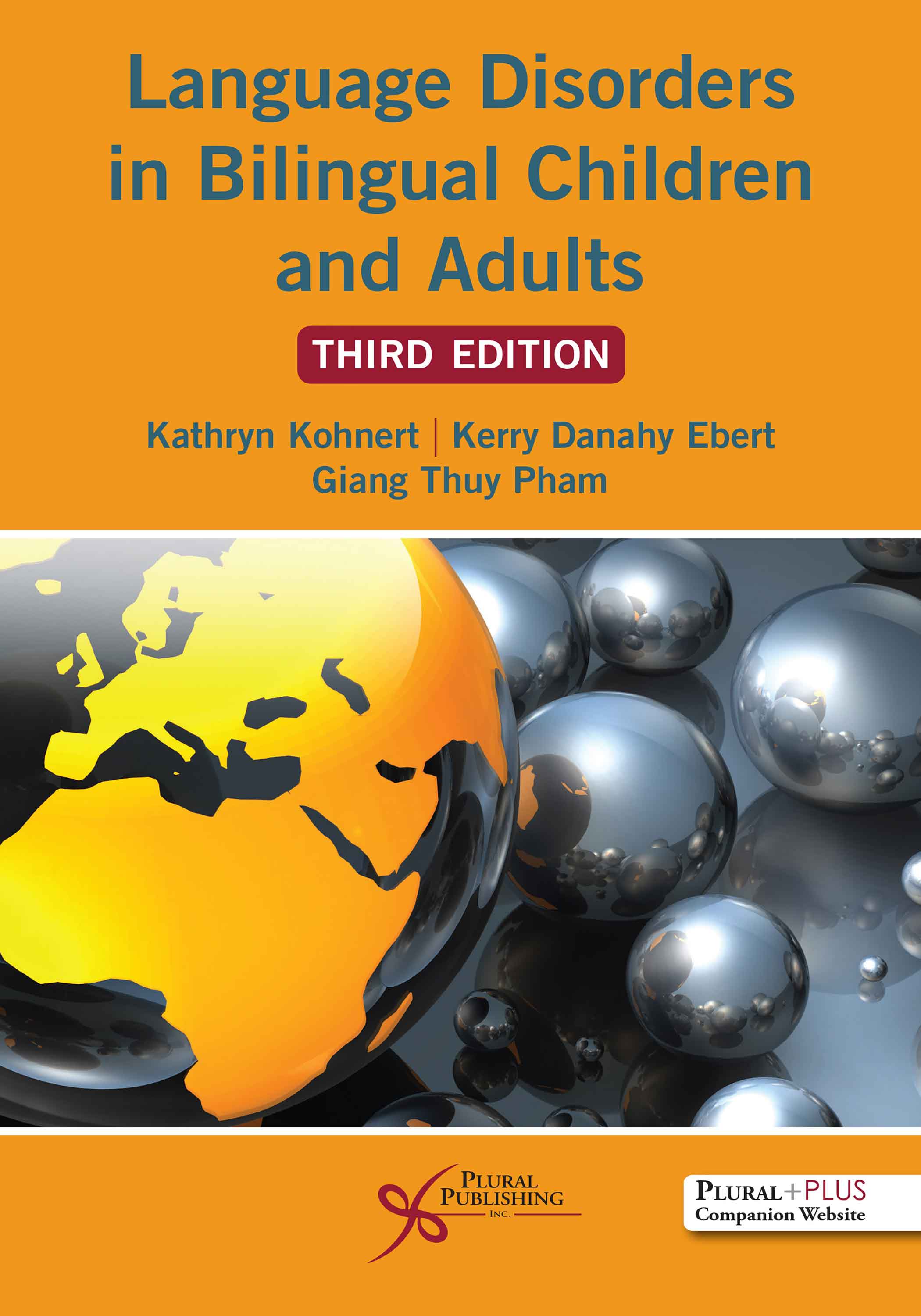
Language Disorders in Bilingual Children and Adults
Third Edition
Kathryn Kohnert, Kerry Danahy Ebert, Giang Thuy Pham
Details: 375 pages, B&W, Softcover, 6" x 9"
ISBN13: 978-1-63550-189-6
© 2022 | Available
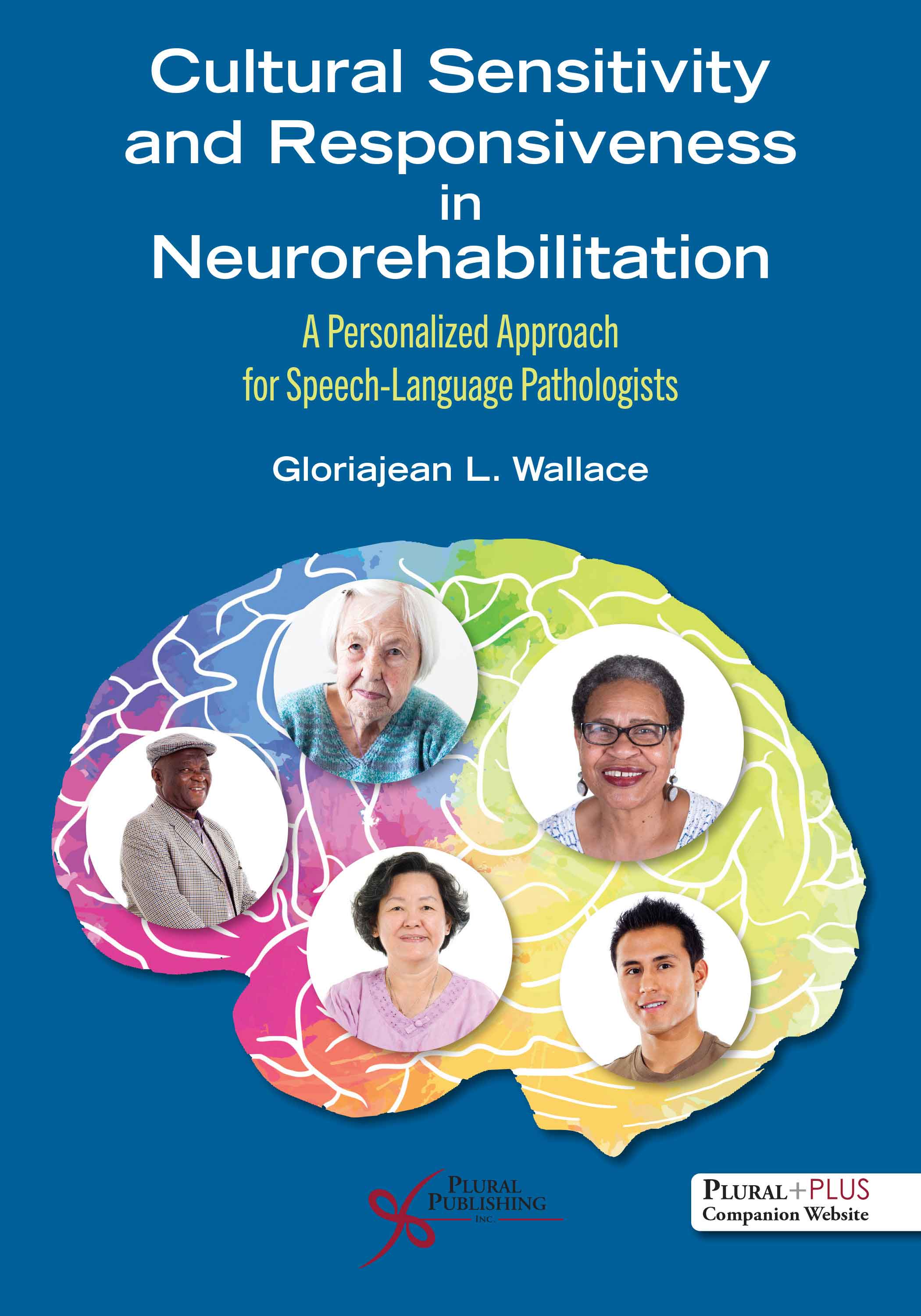
Cultural Sensitivity and Responsiveness in Neurorehabilitation: A Personalized Approach for Speech-Language Pathologists
First Edition
Gloriajean L. Wallace
Details: 853 pages, B&W, Softcover, 7" x 10"
ISBN13: 978-1-63550-032-5
© 2025 | Available
Trauma-Responsive Speech-Language Therapy for Children
First Edition
Yvette D. Hyter
Details: 286 pages, B&W, Softcover, 7" x 10"
ISBN13: 978-1-63550-810-9
© 2027 | Available