

Foundations of Aural Rehabilitation: Children, Adults, and Their Family Members
Seventh Edition
Nancy Tye-Murray
Details: 514 pages, 2-Color, Softcover, 8.5" x 11"
ISBN13: 978-1-63550-872-7
© 2028 | Available
For Instructors
Purchase Print Book
Price: $164.95
Foundations of Aural Rehabilitation: Children, Adults, and Their Family Members, Seventh Edition provides a comprehensive guide to aural rehabilitation across the lifespan for future audiologists and speech-language pathologists. The text addresses diagnostics and listening technologies, auditory and audiovisual speech perception, auditory training, communication strategies and counseling, tinnitus management, and intervention approaches that support meaningful participation in everyday communication. The coverage for children also includes an overview of language, speech, and literacy development and related interventions.
The text’s lifespan perspective addresses the differing developmental, educational, and psychosocial needs of children and adults, while emphasizing patient- and family-centered care and interdisciplinary collaboration. Clear explanations and practical examples make Foundations of Aural Rehabilitation an accessible and authoritative resource.
New to the Seventh Edition
- A chapter devoted to case studies and case management, with a consideration of the roles of the audiologist and speech-language pathologist
- A streamlining of the chapters concerning adults and older adults into a single chapter
- A chapter devoted to tinnitus and its management, written by a tinnitus clinician
- An updating of the chapter on language development by two leading experts in the field
- All chapters revised to reflect recent research, best practices, and technological innovations, including web-based interventions and AI
Key Features
- An evidence-based approach to aural rehabilitation that is consistent with best practices
- An engaging writing style to foster student interest and retention
- A Chapter Outline, Key Chapter Points, and Terms and Concepts to Remember in each chapter that provide a quick summary of chapter contents
- Numerous illustrations, tables, sidebars, and text boxes, which enrich key concepts
- Bolded key terms throughout with definitions in the margins and a comprehensive glossary for easy review
- Chapter Key Resources and Appendices provide tools that can be used in clinical practice
- Separate chapters about auditory training—one for adults and one for children—that help students appreciate patient-specific approaches
PluralPlus Online Ancillaries
For instructors: PowerPoint Slides, Test Bank, Case Studies, Class Activities, Syllabus, Teaching Tips
For students: Learning Objectives, Study Guides, Quizzes, eFlashcards
Contents
Contributors
Preface
Chapter 1: Introduction
The World Health Organization and Hearing-Related Disability
Services Included in the Aural Rehabilitation Plan
Where Does Aural Rehabilitation Occur?
Who Provides Aural Rehabilitation?
Hearing Loss
Service Needs
Culture and Cultural Competence
Evidence-Based Practice
Final Remarks
Key Chapter Points
Terms and Concepts to Remember
Appendix 1–1
Appendix 1–2
Appendix 1–3
Chapter 2: Diagnostics and Listening Devices
Hearing Testing and the Audiogram
Speech Recognition Testing and Speech Audiometry
Listening Devices
Hearing Aids
Teleaudiology
Over-the-Counter Hearing Aids and Personal Sound Amplification Products
Cochlear Implants
Hearing Assistive Technology Systems and Assistive Listening Devices
Final Remarks
Key Chapter Points
Terms and Concepts to Remember
Key Resources
Chapter 3: Auditory-Only Speech Perception and Auditory Training
Listening to Speech With a Hearing Loss
Goals of Auditory Training and Candidacy
Historical Notes
Brain Plasticity and Auditory Training
Theoretical Underpinnings for Auditory Training
Auditory Training to Improve Speech Recognition
Auditory Training to Improve Music Perception
Benefits of Auditory Training
Final Remarks
Key Chapter Points
Terms and Concepts to Remember
Chapter 4: Audiovisual Speech Perception and Speechreading Training
Speechreading for Communication
Characteristics of a Good Lipreader
What Happens When Someone Lipreads?
The Difficulty of the Lipreading Task
What Happens When Someone Speechreads?
Factors That Affect the Speechreading Process
Assessing Vision-Only and Audiovisual Speech Recognition
Speechreading Training
Benefits of Speechreading Training
Oral Interpreters
Final Remarks
Key Chapter Points
Terms and Concepts to Remember
Chapter 5: Communication Strategies and Conversational Styles
Conversation
Facilitative Communication Strategies
Repair Strategies
Stages of Communication Breakdown
Research Related to Repair Strategy Usage and Communication Breakdowns
Conversational Styles and Behaviors
Final Remarks
Key Chapter Points
Terms and Concepts to Remember
Chapter 6: Communication Strategies Training
Conversational Fluency
Self-Efficacy
Issues to Consider When Developing an In-Person Training Program
Getting Started
Model for Training
An Example of the Communication Strategies Training Model in Practice: Acknowledgment Tactics
Program Evaluation
Short-Term Training
Communication Strategies Training for Frequent Communication Partners
Benefits of Training
Final Remarks
Key Chapter Points
Terms and Concepts to Remember
Key Resources
Chapter 7: Counseling, Psychosocial Support, and Assertiveness Training
The Patient’s Story and Narrative Therapy
Counseling
Psychosocial Support
Assertiveness Training
Related Research
Final Remarks
Key Chapter Points
Terms and Concepts to Remember
Key Resources
Appendix 7–1
Chapter 8: Tinnitus by Shelley Witt-Gentile
Tinnitus Basics
Tinnitus Causes
Tinnitus Theories
Tinnitus Characteristics
Tinnitus Reactions
Overall Rehabilitation Plan
Role of Rehabilitation Clinician
Therapeutic Challenges
Where to Start
Final Remarks
Key Chapter Points
Terms and Concepts to Remember
Chapter 9: Aural Rehabilitation for Adults
Who Is This Person?
Where Is the Patient in the Journey?
A Patient-Centered Approach
The Aural Rehabilitation Plan
Older Adults
The Frequent Communication Partner’s Journey
Final Remarks
Key Chapter Points
Terms and Concepts to Remember
Key Resources
Appendix 9–1
Chapter 10: Detection and Confirmation of Hearing Loss in Children
Overview
Detection of Hearing Loss
Confirmation of Hearing Loss
Health-Care Follow-Up
Parent Counseling
Final Remarks
Key Chapter Points
Terms and Concepts to Remember
Key Resources
Appendix 10–1
Appendix 10–2
Chapter 11: Infants and Toddlers
Legislation Concerning Children Who Have Hearing Loss
The Individualized Family Service Plan
Communication Mode
Listening Devices
Early Intervention Programs
Parental Support
Final Remarks
Key Chapter Points
Terms and Concepts to Remember
Key Resources
Appendix 11–1
Appendix 11–2
Chapter 12: School-Age Children
The Transition From Early Intervention Services to Elementary School
Creation of an Individual(ized) Education Program
The Multidisciplinary Team
School and Classroom Placement
Amplification and Assistive Listening Devices
Classroom Acoustics
Other Services
Children Who Have Mild or Moderate Hearing Loss
Children Who Have Auditory Processing Disorder
Children Who Have Unilateral Hearing Loss
Final Remarks
Key Chapter Points
Terms and Concepts to Remember
Key Resources
Appendix 12–1
Chapter 13: Auditory Training for Children
Four Design Principles
Developing Analytic Training Objectives
Developing Synthetic Training Objectives
Formal and Informal Auditory Training
Interweaving Auditory Training With Other Components of Aural Rehabilitation
Example Programs
Final Remarks
Key Chapter Points
Terms and Concepts to Remember
Appendix 13–1
Appendix 13–2
Chapter 14: Language by Nancy Tye-Murray, Linda Spencer, and Ling-Yu Guo
Overview
Language Content: Semantics
Language Form: Morphology and Syntax
Language Use: Pragmatics
Language Evaluation
Approaches for Teaching Language
Language Instruction
Final Remarks
Key Chapter Points
Terms and Concepts to Remember
Chapter 15: Speech and Literacy
Speech Characteristics
Assessing Speech Skills
Speech Therapy
Literacy Characteristics
Literacy Evaluation
Literacy Instruction
Final Remarks
Key Chapter Points
Terms and Concepts to Remember
Key Resources
Appendix 15–1
Chapter 16: Case Studies
Case Study 1: Hearing Loss and Participation Restrictions in a 64-Year-Old Attorney
Case Study 2: Infant with Congenital Profound Hearing Loss
Case Study 3: Noise-Induced Hearing Loss in a 55-Year-Old Rock Musician
Case Study 4: Unilateral Hearing Loss in an 8-Year-Old Child
Case Study 5: Language and Literacy Concerns in an 8-Year-Old Girl with Moderate Hearing Loss
Case Study 6: Use of Online Auditory Training in a Middle-Aged Adult
Case Study 7: Reluctance Toward Amplification in a 68-Year-Old Man
Case Study 8: Infant Who Failed Newborn Hearing Screening
Final Remarks
Key Chapter Points
Terms and Concepts to Remember
Glossary
References
Index

Nancy Tye-Murray
Nancy Tye-Murray, PhD, is Professor Emeritus at the Washington University School of Medicine in St. Louis and a member of the Scientific Advisory Board for Neurotone AI. She has served as Principal Investigator of numerous grants from the National Institutes of Health, which provided support for her research in audiovisual speech perception and auditory training. Dr. Tye-Murray is the past president of the Academy of Rehabilitative Audiology, former Hearing Editor for Journal of Speech-Language-Hearing Research, and former Director of Research at Central Institute for the Deaf, where she held the Richard Silverman Endowed Chair. She is known for translation research, bridging science with clinical applications, and for innovative aural rehabilitation solutions, including digital hearing healthcare therapeutics, speechreading assessment tools, and communication strategies training protocols.
Foundations of Aural Rehabilitation: Children, Adults, and Their Family Members, Seventh Edition comes with access to supplementary student and instructor resources on a PluralPlus companion website.
The companion website is located at: https://www.pluralpublishing.com/publication/far7e
STUDENTS:
The student resources include Learning Objectives, Study Guides, Quizzes, and eFlashcards.
To access the student resources, you must register on the companion website and log in using the access code located in the front of your textbook.
INSTRUCTORS:
The instructor resources include PowerPoint Slides, Test Bank, Case Studies, Class Activities, Syllabus, and Teaching Tips. You will also have access to all of the student resources listed above.
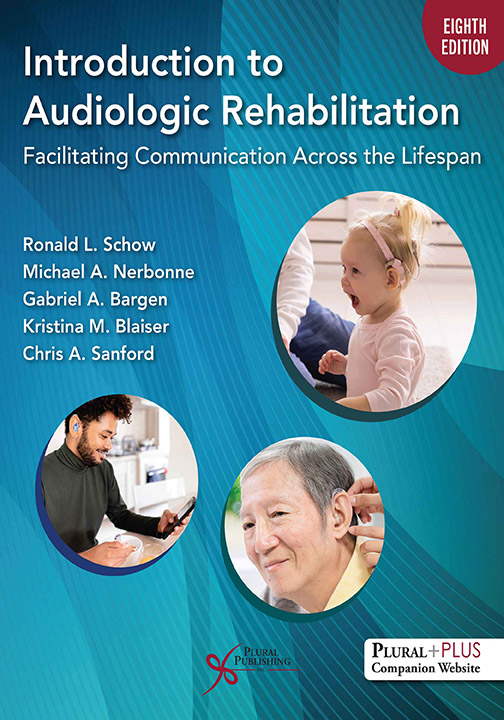
Introduction to Audiologic Rehabilitation: Facilitating Communication Across the Lifespan
Eighth Edition
Ronald L. Schow, Michael A. Nerbonne, Gabriel A. Bargen, Kristina M. Blaiser, Chris A. Sanford
Details: 542 pages, 2-Color, Softcover, 8.5" x 11"
ISBN13: 978-1-63550-755-3
© 2026 | Available
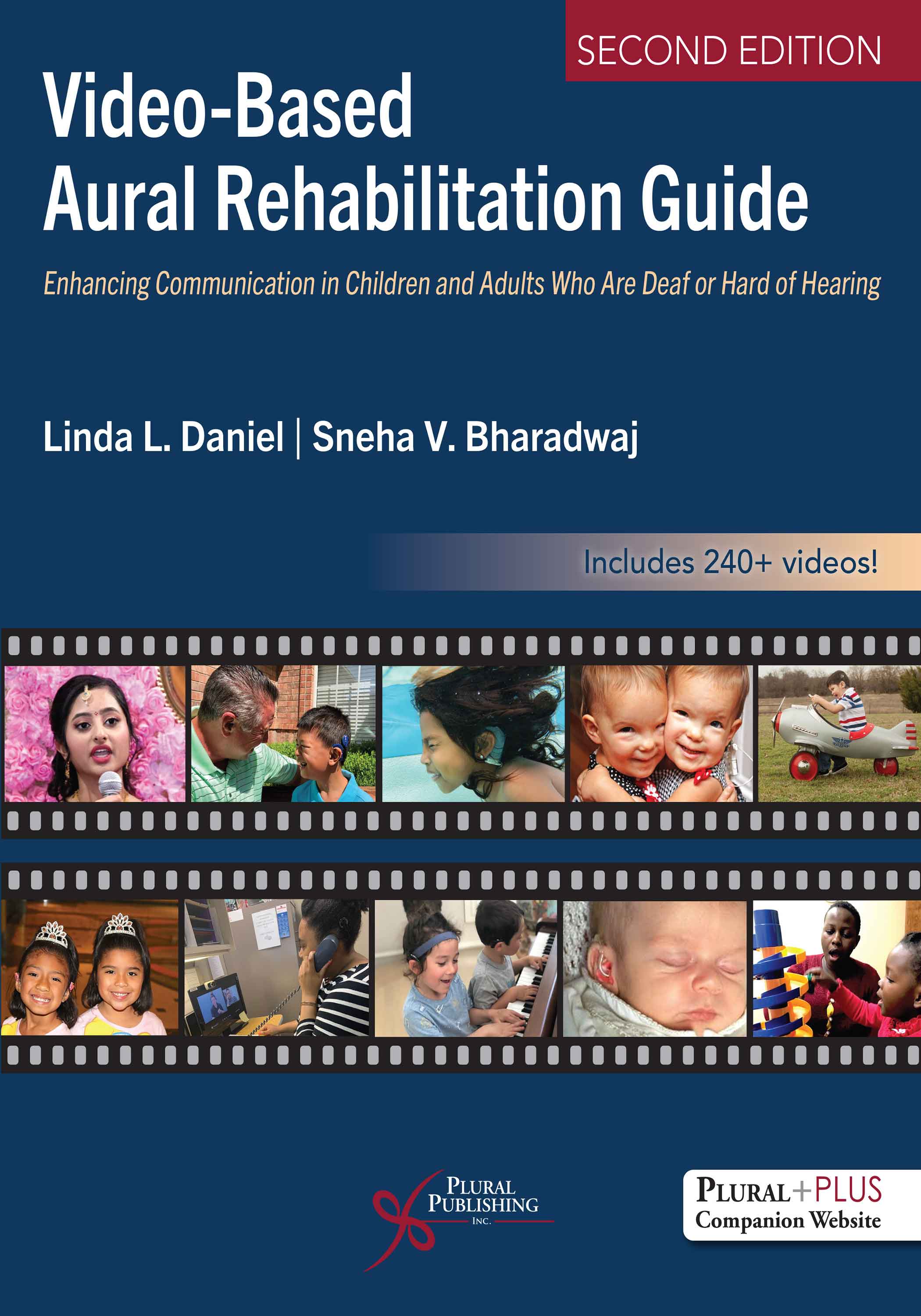
Video-Based Aural Rehabilitation Guide: Enhancing Communication in Children and Adults Who Are Deaf or Hard of Hearing
Second Edition
Linda L. Daniel, Sneha V. Bharadwaj
Details: 426 pages, B&W, Softcover, 8.5" x 11"
ISBN13: 978-1-63550-753-9
© 2026 | Available