

A Coursebook on Scientific and Professional Writing for Speech-Language Pathology
Seventh Edition
M.N. Hegde
Details: 359 pages, B&W, Spiral-bound, 8.5" x 11"
ISBN13: 978-1-63550-703-4
© 2028 | Coming Soon
Release Date: 11/06/2026
For Instructors
Purchase
Available for purchase starting 11/01/2026
Print Book: $119.95
eBook: $119.95
A Coursebook on Scientific and Professional Writing for Speech-Language Pathology, Seventh Edition is a unique, hands-on resource designed to help speech-language pathology students develop the academic and clinical writing skills essential to success in the field. Ideal for undergraduate and graduate coursework, clinical practica, and research training, this practical text combines clear instruction with extensive guided practice in grammar, composition, scientific style, evidence-based writing, and professional documentation.
Beginning with a timely introduction to writing in the AI era, the book progresses through three parts devoted to foundational writing skills, scientific writing, and professional writing. Its scientific-writing part follows the guidelines of the seventh edition of the Publication Manual of the American Psychological Association (APA), while its professional-writing part includes assessment and treatment reports and data documentation practices in clinical and educational settings.
A hallmark of the Coursebook is its highly practical, student-friendly design. Students “learn by doing” through a side-by-side format that pairs model examples with structured opportunities to revise, edit, and compose their own writing, helping them build confidence and competence through guided practice.
New to the Seventh Edition
- The book has been streamlined and updated to improve accessibility while maintaining the comprehensive coverage instructors and students rely upon. The clinical writing practice exercises have been moved to the companion website, allowing students to complete them electronically and easily submit them to their instructor.
Updates to the Scientific Writing section include
- Addition of new exemplars and practice exercises
- Revised and expanded coverage of:
- Proper citation of electronic sources
- Online submission of journal manuscripts and conference proposals
- Reviewing and revising copyedited manuscripts and page proofs
- Evaluating web-based source information for reliability, validity, and appropriate scholarly use
Updates to the Professional Writing section include
- Revised clinical report samples that reflect current professional practices and client-centered documentation
- New SOAP progress report examples and trial-by-trial treatment data recording sheets
- Updated public chool documentation, including eligibility reports, IEPs, SOAP notes, and rubric-based intervention tracking forms
PluralPlus Online Ancillaries
For Students: Downloadable practice exercises for writing diagnostic reports, treatment plans and progress reports for:
- Speech Sound Disorders
- Child Language Disorders
- Stuttering
- Voice Disorders
Contents
Preface to the Seventh Edition
Acknowledgments
About the Author
Introduction: Writing in the AI Era
Part A
FOUNDATIONS OF SCIENTIFIC AND PROFESSIONAL WRITING
A.1. BASIC RULES OF USAGE
Ampersand
A.1.1. Use the Ampersand Correctly
Apostrophe
A.1.2. Do Not Turn a Possessive Into a Plural
A.1.3. Do Not Turn a Plural Into a Possessive
A.1.4. Use the Correct Forms of Possessive Nouns
A.1.5. Use the Possessive Forms of Pronouns Correctly
A.1.6. Distinguish Contractions From Possessives
Unusual Singulars and Plurals
A.1.7. Use Unusual Singulars and Plurals Correctly
Comma
A.1.8. Use a Serial Comma
A.1.9. Do Not Use a Serial Comma When You Write Only Two Parallel Terms and Connect Them With a Conjunction
A.1.10. Use a Comma to Separate Parenthetic Expressions That Are Not in Parentheses
A.1.11. Place a Comma Before a Conjunction Introducing an Independent Clause
A.1.12. Do Not Use a Comma Before a Conjunction That Is Followed by a Dependent Clause
Dash
A.1.13. Prefer an Em Dash to a Comma to Set Off an Abrupt Break
Semicolon
A.1.14. Join Independent Clauses With a Semicolon That Are Not Joined by a Conjunction
Agreement
A.1.15. Follow the Rules of Agreement
Modifiers
A.1.16. Use Modifiers Correctly
Pronouns
A.1.17. Clarify the Referents of Pronouns
A.1.18. Let the Pronoun Agree in Number With Its Antecedent
A.1.19. Use the Proper Case of Pronoun
Sentence Fragments
A.1.20. Do Not Break a Single Sentence Into Two Parts
A.1.21. Do Not Write Sentence Fragments as a Series of Declarative Statements
A.1.22. Do Not Punctuate Appositives
Nouns and Adjectives
A.1.23. Use Certain Terms Only in Their Adjectival Forms
A.1.24. Do Not Turn a Noun Into a Verb
Participial Phrase
A.1.25. Let a Participial Phrase at the Beginning of a Sentence Refer to the Grammatical Subject
A.2 BASIC RULES OF COMPOSITION
Structure of Research Papers
A.2.1. Design a Broad Outline of Your Paper
A.2.2. Design Headings and Subheadings of Your Paper
Composing Paragraphs
A.2.3. Write Paragraphs That Express Related Ideas
A.2.4. Do Not Write Paragraphs That Are Too Long
A.2.5. Do Not Write One-Sentence Paragraphs
A.2.6. Begin and End Most Paragraphs With Transitionary Sentences
Concise and Direct Writing
A.2.7. Prefer the Shorter to the Longer Sentences
A.2.8. Prefer the Active Voice
A.2.9. Say What It Is, Instead of What It Is Not
A.2.10. Avoid Too Many Qualifications
A.2.11. Use Definite, Specific, and Concrete Language
A.2.12. Eliminate or Replace Unnecessary Phrases
A.2.13. Avoid Redundant Phrases
A.2.14. Avoid Wordiness
A.2.15. Avoid Jargon
A.2.16. Avoid Euphemism
A.2.17. Keep Related Words Together
Parallelism
A.2.18. Write in Parallel Terms
A.2.19. Maintain Parallelism in Numbered or Bulleted Lists
Dangling or Misplaced Modifiers
A.2.20. Avoid Dangling Modifiers
A.2.21. Avoid Misplaced Modifiers
Shifts Within and Between Sentences
A.2.22. Avoid Shifts Within and Between Sentences
Quotations
A.2.23. Make Quotations Count
A.2.24. Do Not Overuse Quotations
A.2.25. Do Not Include Islands of Quotations
A.2.26. Do Not Begin a Sentence With a Quotation
A.2.27. Use Quotation and Punctuation Marks Correctly
A.2.28. Do Not Misuse Quotation Marks
A.2.29. Give References for All Direct Quotations
A.2.30. Reproduce Quotations Exactly
A.2.31. Integrate Quotations of Fewer Than 40 Words With the Text
A.2.32. Arrange Quotations as a Block When They Have 40 Words or More
A.2.33. Show Correctly the Changes in Quotations
A.2.34. Quote Correctly the Sources on the Internet
Precision in the Use of Scientific Terms
A.2.35. Use the Terms Ending in -ology Correctly
A.2.36. Use Certain Terms Ending in -ics Correctly
Use of Fresh Language
A.2.37. Avoid Clichés
A.2.38. Avoid Colloquial or Informal Expressions
A.3. COMMONLY MISUSED WORDS AND PHRASES
A.3.1. Accept and Except
A.3.2. Affect and Effect
A.3.3. Alternate and Alternative
A.3.4. Allusion and Illusion
A.3.5. And/Or
A.3.6. Baseline and Baserate
A.3.7. Effect and Impact
A.3.8. Elicit and Evoke
A.3.9. Elicit and Illicit
A.3.10. Farther and Further
A.3.11. Focus and Analysis
A.3.12. Incidence and Prevalence
A.3.13. Inter- and Intra-
A.3.14. Latter and Later
A.3.15. Proof and Support
A.3.16. Secondly and Thirdly
A.3.17. Since and Because
A.3.18. There and Their
PART B
SCIENTIFIC WRITING
B.1. INTRODUCTION TO SCIENTIFIC WRITING
B.2. WRITING WITHOUT BIAS
B.2.1. Terms for Writing Without Bias
B.2.2. Do Not Overuse the Pronouns He and He or She
B.2.3. Use the Appropriate Terms of Gender Identities
B.2.4. Use the Appropriate Terms of Sexual Orientations
B.2.5. Avoid Prejudicial Reference to Disabilities
B.2.6. Use Either Person-First or Identity-First Language
B.2.7. Avoid Prejudicial Reference to Ethnic or Racial Identity
B.2.8. Avoid Prejudicial Reference to Age
B.2.9. Avoid Prejudicial Comparisons of Study Groups
B.3. FORMAT OF SCIENTIFIC WRITING
Margins
B.3.1. Leave Correct Margins
Title Page
B.3.2. Type Correctly the Title Page of a Paper for Publication
B.3.3. Type Correctly the Title Page of a Class (Term) Paper
Running Head
B.3.4. Type the Manuscript Running Head Correctly
Abstract
B.3.5. Write an Abstract on the Second Page
Beginning of Text
B.3.6. Begin the Text With an Untitled Introductory Section on Page Three
Heading Levels
B.3.7. Use the Headings Within the Text Consistently
Fonts and Font Size
B.3.8. Use Acceptable Fonts and Size
B.3.9. Use Bold Font Correctly
Page Numbers
B.3.10. Number the Pages Correctly
B.3.11. Reprint the Corrected Pages
Line Spacing and Line Length
B.3.12. Use Appropriate Line Spacing
B.3.13. Align the Text to the Left Margin
B.3.14. Correct the Spelling Errors
B.4. ELEMENTS OF SCIENTIFIC STYLE
Capitalization
B.4.1. Capitalize the First Words
B.4.2. Capitalize the First and the Major Words
B.4.3. Capitalize the Words Correctly in Headings
B.4.4. Capitalize Proper Nouns and Trade Names
B.4.5. Capitalize the Chapters and Sections the Reader Is Referred To
B.4.6. Capitalize Nouns That Are Followed by a Number or Letter
B.4.7. Capitalize Both Words in an Otherwise Capitalized Hyphenated Compound
B.4.8. Do Not Capitalize the Second Word of a Hyphenated Compound in Reference Lists
Italicization
B.4.9. Use Italics Correctly Within the Body of Text
B.4.10. Use Reverse Italics Correctly
B.4.11. Use Italics Correctly in the Reference List
Hyphenation
B.4.12. Use the Hyphen Correctly
B.4.13. Do Not Overuse or Misuse the Hyphen
Indentation
B.4.14. Use Correct Indentation
Space After Punctuation
B.4.15. Give Correct Space or No Space After Punctuation
Abbreviations
B.4.16. Write Out Abbreviations the First Time You Use the Term, and Enclose the Abbreviations in Parentheses
B.4.17. Do Not Start a Sentence With a Lowercase Abbreviation
B.4.18. Use Latin Abbreviations Only in Parenthetical Constructions
B.4.19. Add the Lowercase Plural Morpheme s to Plural Abbreviations Without an Apostrophe
B.4.20. With Abbreviations, Use the Period Correctly
B.4.21. Abbreviate Units of Measurement When a Number Is Specified
Numbers in Words or Numerals
B.4.22. Write Out Units of Measurement When a Number Is Not Specified
B.4.23. Use Roman Numerals Only When It Is an Established Practice
B.4.24. Use Arabic Numerals for Numbers 10 and Above
B.4.25. Use Numerals for Numbers Below 10 in Specified Contexts
B.4.26. Write Out in Words Numbers Below 10 in Specified Contexts
B.4.27. Write Out in Words Any Number That Begins a Sentence
B.4.28. Combine Words and Numerals in Specified Contexts
Reference Citations Within the Text
B.4.29. Cite the Author’s Last Name and Year or Years of Publication in the Text
B.4.30. Cite Both Names in the Text When a Work Has Two Authors
B.4.31. Cite Works With Three or More Authors With Only the First Author
B.4.32. Distinguish Works of Multiple Authors Published in the Same Year
B.4.33. Join Multiple Author Names With the Conjunction and or the Ampersand
B.4.34. Distinguish the Different First Authors With the Same Surname
B.4.35. Cite Multiple Works of the Same Author in a Temporally Ascending Order
B.4.36. Attach Alphabetical Suffixes to the Same Author’s Multiple Publications in the Same Year
B.4.37. Within Parentheses, Arrange the Last Names of Multiple Authors in Alphabetical Order
B.4.38. Cite Secondary Sources Sparingly and Correctly
B.4.39. Cite Correctly the Works With No Author or an Anonymous Author
B.4.40. Cite Correctly the Year of Publication in Parenthetical Text
B.4.41. Cite Correctly the Specific Parts of a Source
Reference List
B.4.42. General Guidelines on Creating a Reference List
B.4.43. Begin the Reference List on a New Page With a Centered Heading
B.4.44. In the Reference List, Arrange Authors in Alphabetical Order
B.4.45. Arrange Multiple Works of the Same Single Author From the Earliest to the Latest Year
B.4.46. Alphabetize the Titles of Several Works of the Same Author Published in the Same Year
B.4.47. Arrange the Multiple Works of the Same Author Published in Different Years in Temporally Ascending Order
B.4.48. Alphabetize the Different Authors With the Same Last Name According to Their Initials
B.4.49. Format Each Entry in the Reference List With a Hanging Indent of Five Spaces
B.4.50. Use the Specified Abbreviations in Reference Lists
Selected Examples of References
Printed Journal Articles
B.4.51. Overview of Referencing Printed Journal Articles
B.4.52. Use the Correct Format to Reference Printed Journal Articles
B.4.53. Arrange Correctly the Articles With Multiple Authors
B.4.54. Reference Correctly the Different Types of Journal Publications
Magazines and Newspaper Articles
B.4.55. Reference Correctly the Publications From Magazines and Newspapers
Abstracts
B.4.56. Reference Correctly the Article Abstracts Used as the Primary Source
Books and Book Chapters
B.4.57. Authored Books in Reference Lists
B.4.58. Edited Books and Chapters in Edited Books
Conference and Convention Presentations
B.4.59. Paper and Poster Presentations
Unpublished Articles, Dissertations, and Theses
B.4.60. Unpublished Articles, Theses, or Dissertations
B.4.61. Theses and Dissertations Published in a Database or Available Online
B.4.62. Guidelines on Using Electronic Sources in Scientific Writing
B.4.63. Examples of Electronic Sources in the Reference List
B.5. WRITING SECTIONS OF RESEARCH PAPERS AND PROPOSALS
B.5.1. General Guidelines on Completed and Proposed Empirical Studies
B.5.2. Sections of a Research Paper
B.6. MANUSCRIPT SUBMISSION, REVISION, AND PROOFREADING
B.6.1. Manuscript Submission for Journal Publication
B.6.2. Submission for Convention or Conference Presentations
B.6.3. Book and Book Chapter Publications
B.6.4. Copyediting and Author Revisions
B.6.5. Proofreading
PART C
PROFESSIONAL WRITING
C.1. INTRODUCTION TO PROFESSIONAL WRITING
C.2. ELEMENTS OF DIAGNOSTIC REPORTS
C.2.1. Common Elements of a Diagnostic Report
C.2.2. Unique Elements Depending on the Age of the Client
C.3. DIAGNOSTIC REPORTS AND COMBINED DIAGNOSTIC REPORTS AND TREATMENT PLANS
C.3.0. Introduction to Diagnostic Reports and Treatment Plans
C.3.1. Diagnostic Report: Speech Sound Disorder in a Child
C.3.2. Diagnostic Report and Treatment Plan: Language and Speech Disorder in a Child
C.3.3. Diagnostic Report: Voice Disorder in an Adult
C.3.4. Diagnostic Report: Aphasia and Apraxia of Speech in an Adult
C.3.5. Diagnostic Report and Treatment Plan: Stuttering in an Adult
C.3.6. Diagnostic Report and Treatment Plan: Stuttering in a Child
C.3.7. Diagnostic Report and Treatment Plan: Dysarthria-Spastic Type in an Adult
C.4. COMPREHENSIVE TREATMENT PLANS
C.4.0. Introduction to Writing Treatment Plans
C.4.1. Comprehensive Treatment Plan: Speech Sound Disorder in a Child
C.5. BRIEF TREATMENT PLANS
C.5.0. Introduction to Brief Treatment Plans
C.5.1. Brief Treatment Plan: Stuttering in a Child
C.5.2. Brief Treatment Plan: Speech Sound Disorder in a Child
C.5.3. Brief Treatment Plan: Language Disorder in a Child
C.5.4. Brief Treatment Plan: Voice Disorder in an Adult
C.6. PROGRESS REPORTS
C.6.0. Introduction to Progress Reports
C.6.1. Trial-by-Trial Data Recording Sheet for Treatment Sessions
C.6.2. Progress Report: Treatment of Stuttering in an Adult
C.6.3. Progress Report: Treatment of Speech Sound Disorder in a Child
C.6.4. Progress Report: Treatment of Language Disorder in a Child
C.6.5. Progress Report: Treatment of Voice Disorder in an Adult
C.6.6. SOAP Progress Report: Aphasia in an Adult
C.7. REPORT WRITING IN PUBLIC SCHOOLS
C.7.0. Introduction to Report Writing in Public Schools
C.7.1. Speech and Language Assessment and Service Eligibility Report Format
C.7.2. IEP: Treatment of Child Language Disorder
C.7.3. IEP: Treatment of Speech Sound Disorder
C.7.4. IEP: Treatment of Voice Disorder
C.7.5. IEP: Treatment of Stuttering
C.7.6. SOAP Note Format
C.7.7. Rubric Template Data Sheet to Record Language Intervention Data
Selected Resources
Glossary
Index
A Coursebook on Scientific and Professional Writing for Speech-Language Pathology, Seventh Edition comes with access to supplementary student and instructor resources on a PluralPlus companion website.
The companion website is located at: https://www.pluralpublishing.com/publication/cspw7e
STUDENTS:
The student resources include Downloadable practice exercises for writing diagnostic reports, treatment plans and progress reports for:
- Speech Sound Disorders
- Child Language Disorders
- Stuttering
- Voice Disorders
To access the student resources, you must register on the companion website and log in using the access code located in the front of your textbook.
*Note for students: If you have purchased this textbook used or have rented it, your access code will not work if it was already redeemed by the original buyer of the book. Plural Publishing does not offer replacement access codes for used or rented textbooks.
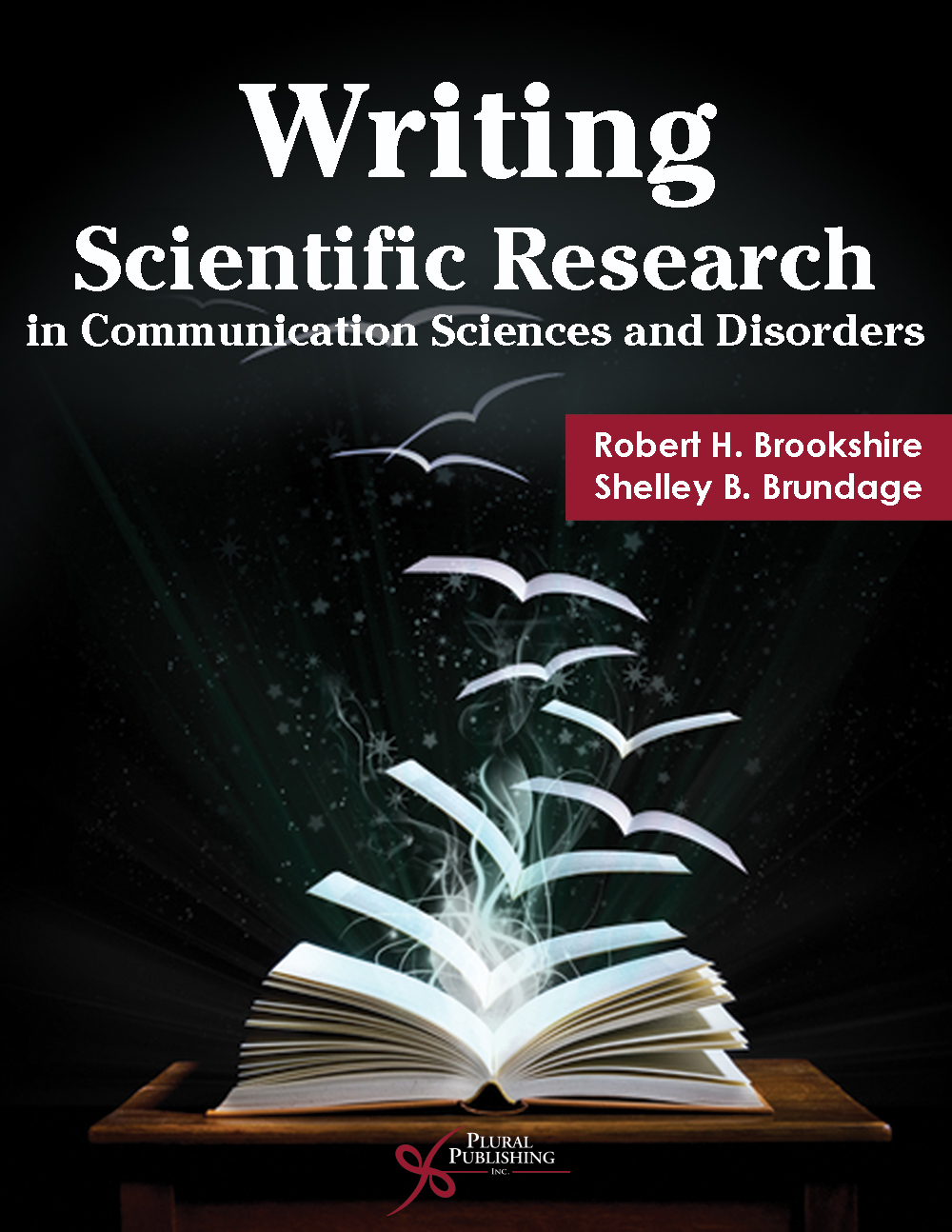
Writing Scientific Research in Communication Sciences and Disorders
First Edition
Robert H. Brookshire, Shelley B. Brundage
Details: 214 pages, B&W, Softcover, 7" x 10"
ISBN13: 978-1-59756-614-8
© 2016 | Available
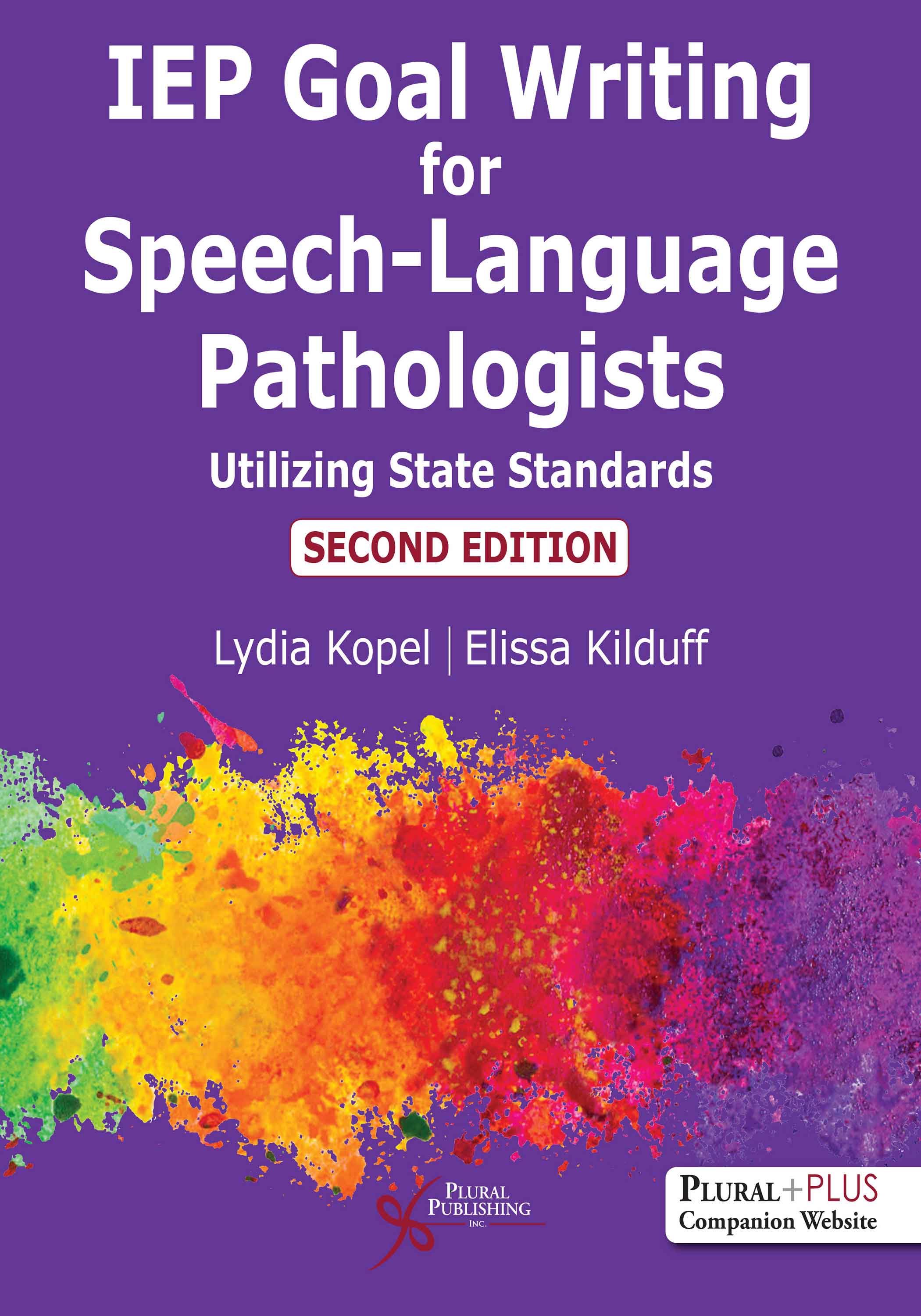
IEP Goal Writing for Speech-Language Pathologists: Utilizing State Standards
Second Edition
Lydia Kopel, Elissa Kilduff
Details: 243 pages, B&W, Softcover with layflat binding, 8.5" x 11"
ISBN13: 978-1-63550-202-2
© 2021 | Available
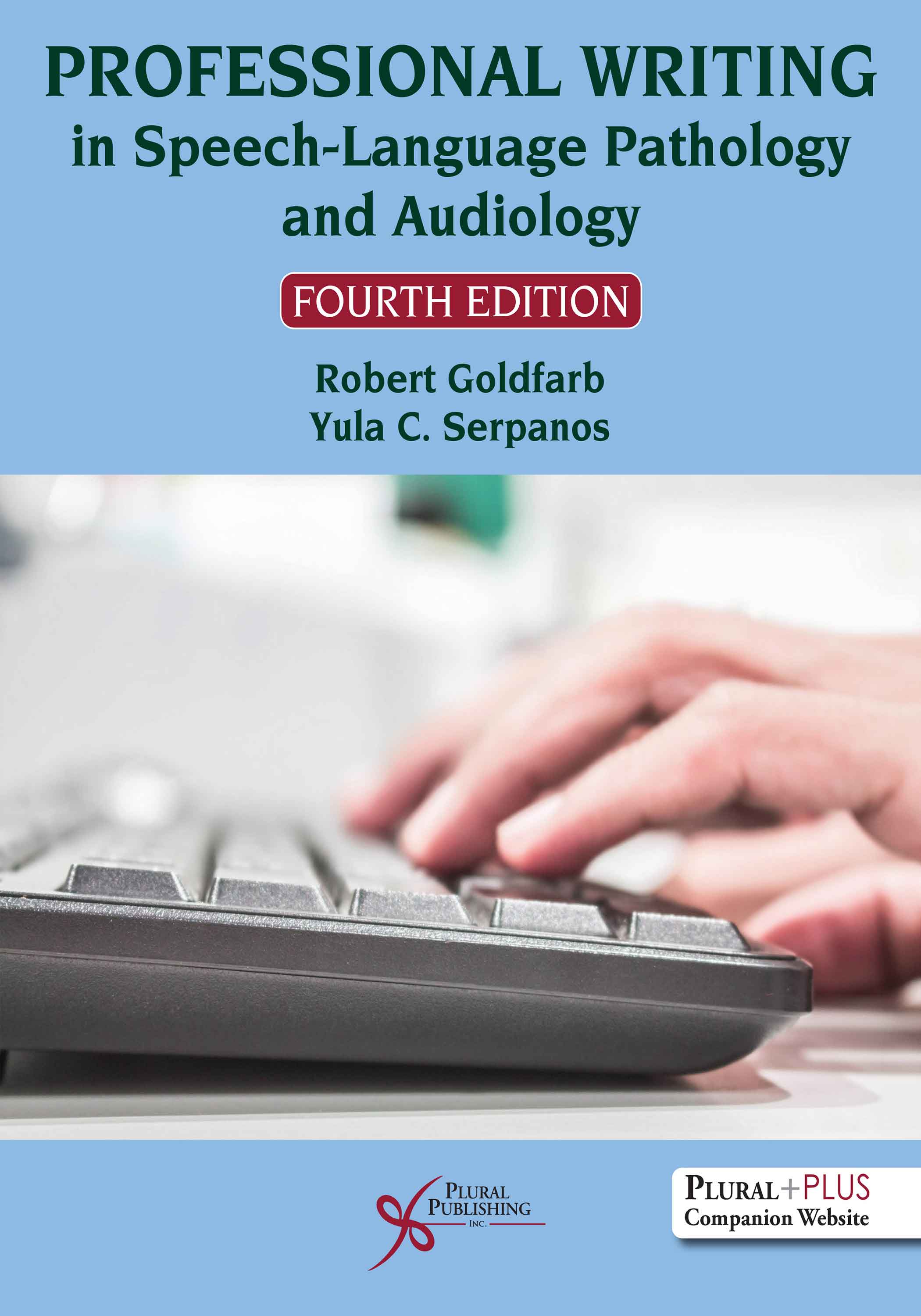
Professional Writing in Speech-Language Pathology and Audiology
Fourth Edition
Robert Goldfarb, Yula C. Serpanos
Details: 393 pages, B&W, Softcover, 8.5" x 11"
ISBN13: 978-1-63550-701-0
© 2025 | Available
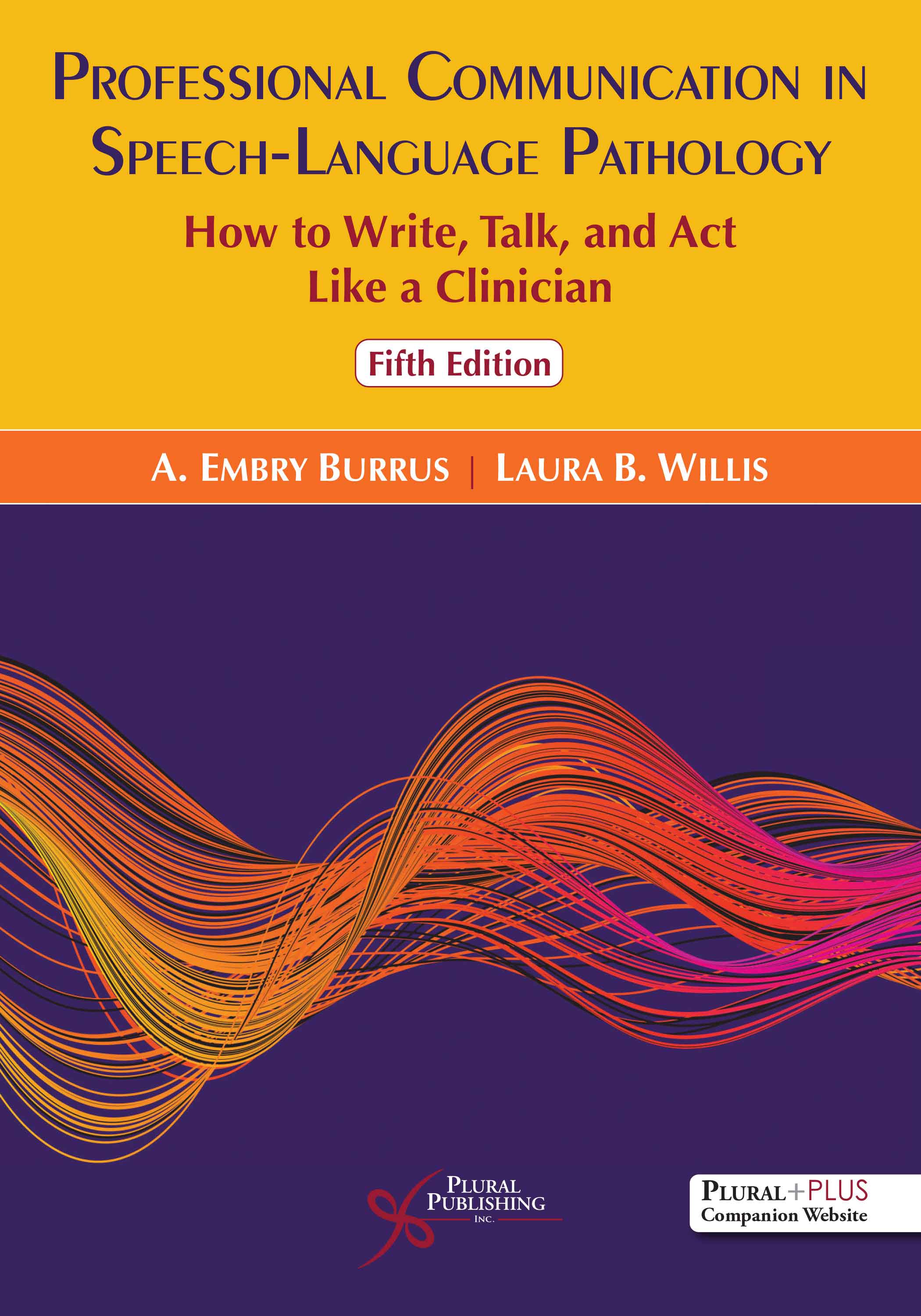
Professional Communication in Speech-Language Pathology: How to Write, Talk, and Act Like a Clinician
Fifth Edition
A. Embry Burrus, Laura B. Willis
Details: 280 pages, B&W, Softcover, 7" x 10"
ISBN13: 978-1-63550-658-7
© 2026 | Available