
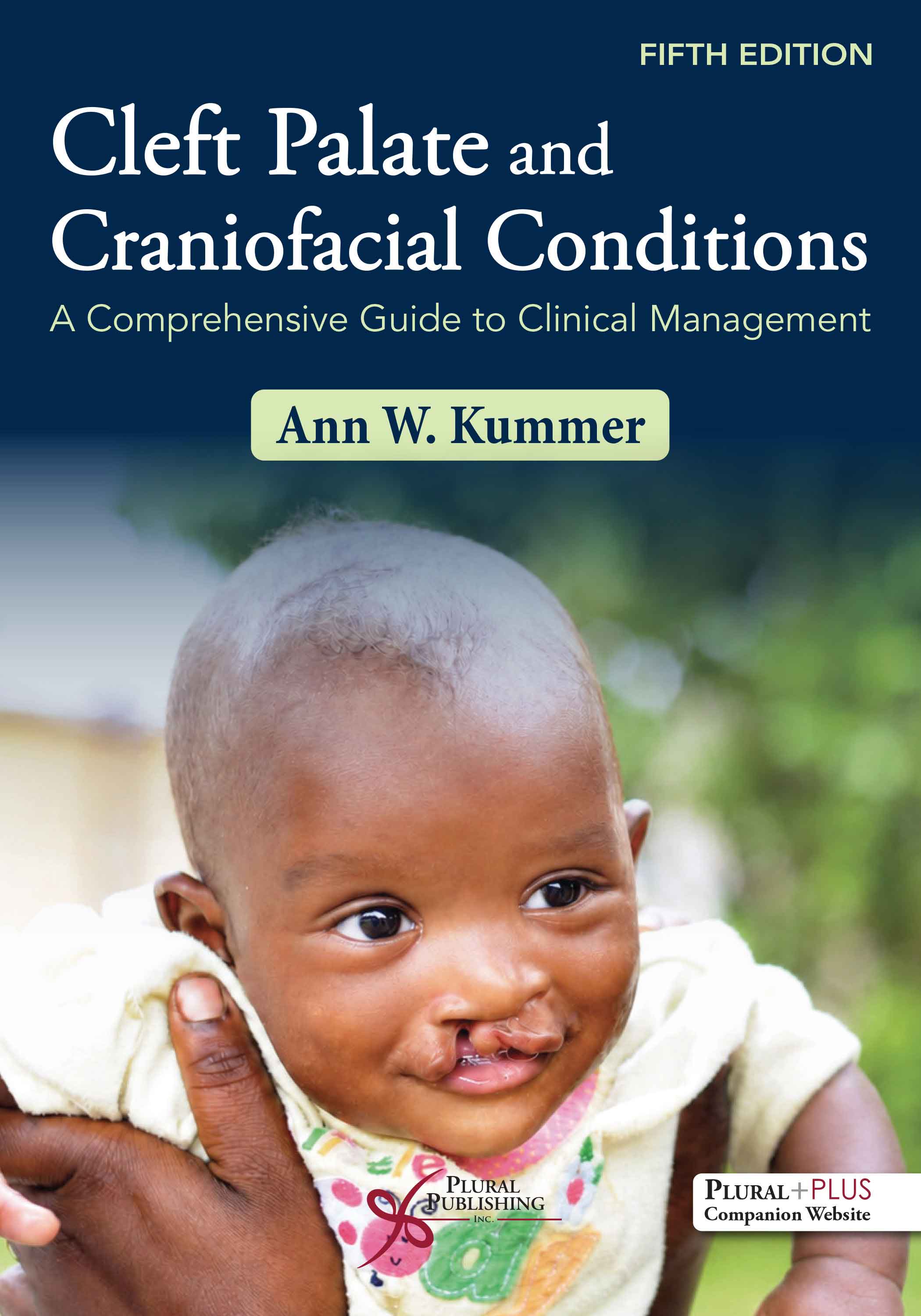
Cleft Palate and Craniofacial Conditions: A Comprehensive Guide to Clinical Management
Fifth Edition
Ann W. Kummer
Details: 683 pages, Full Color, Softcover, 7" x 10"
ISBN13: 978-1-63550-797-3
© 2028 | Available
For Instructors
Purchase Print Book
Price: $129.95
Cleft Palate and Craniofacial Conditions: A Comprehensive Guide to Clinical Management, Fifth Edition continues to set the standard as the most in-depth and clinically relevant text on the subject. Written by renowned clinician, educator, and researcher Ann W. Kummer, this extensively updated edition combines foundational science with practical, evidence-based clinical application for the assessment and management of cleft palate, craniofacial conditions, and velopharyngeal dysfunction.
Designed for graduate-level instruction and interdisciplinary clinical practice, the fifth edition provides a clear, sequential approach that helps readers build knowledge from anatomy and genetics through assessment, treatment, and team-based care. Richly illustrated and supported by hundreds of clinical photographs, diagnostic images, and online videos, this trusted text bridges the gap between theory and real-world clinical decision making.
Drawing on decades of clinical and teaching experience, Dr. Kummer presents not only the “what” and “why” of craniofacial management, but also the critical “how” that clinicians need for accurate diagnosis, effective treatment planning, and successful intervention. Comprehensive yet highly practical, this text remains an essential resource for graduate students, speech-language pathologists, craniofacial team members, and other healthcare professionals who work with individuals affected by clefts and craniofacial conditions.
New to the Fifth Edition
- Expanded coverage of speech, resonance, and velopharyngeal dysfunction, including additional clinical strategies for both assessment and treatment
- Updated chapters on genetics, craniofacial syndromes, developmental and psychosocial considerations, and surgical management, with contributions from experts across multiple craniofacial disciplines
- Additional evidence-based speech therapy strategies and practical guidance for achieving carryover through the use of motor learning and motor memory principles
- Revised organization, streamlined presentation, and the addition of many summary tables for improved readability, clarity, and comprehension
- New clinical photographs, illustrations, and diagnostic examples throughout the text
- Enhanced online learning resources and video content to support both classroom instruction and independent study
Key Features
- Comprehensive coverage of cleft palate, craniofacial anomalies, resonance disorders, and velopharyngeal dysfunction across the lifespan
- More than 700 full-color photographs, illustrations, tables, and diagnostic images that enhance understanding of complex concepts
- Nearly 300 online clinical videos demonstrating speech disorders, instrumental evaluations, surgical outcomes, and therapy techniques
- Practical “how-to” guidance for speech assessment, differential diagnosis, treatment planning, and intervention
- Chapter outlines, case studies, “Speech Notes,” discussion questions, and “Cleft Notes” worksheets that enhance learning and reinforce clinical reasoning
- Extensive glossary of terms
PluralPlus Online Ancillaries
For instructors: PowerPoint Slides, Recorded Lectures, Test Bank, Image Bank, Videos, Syllabus, “Cleft Notes”
For students: Videos, Forms/Documents, “Cleft Notes”
Contents
Preface
About the Author
Contributors
Key to Phonetic Symbols
Part 1: Normal and Abnormal Craniofacial Structures
Chapter 1: Anatomy and Physiology
Introduction
Craniofacial Structures
Intraoral Structures
Pharyngeal Structures
Velopharyngeal Valve
Variations in Velopharyngeal Closure
Subsystems of Speech: Putting It All Together
Summary
For Review and Discussion
References
Chapter 2: Genetics and Patterns of Inheritance
Introduction
Cell Anatomy
Deoxyribonucleic Acid and Genes
Chromosomes
Mendelian Inheritance
Multifactorial Inheritance
Summary
For Review and Discussion
References
Chapter 3: Clefts of the Lip and Palate
Introduction
Embryological Development
Clefts of the Primary Palate
Clefts of the Secondary Palate
Submucous Cleft Palate
Facial Clefts
Causes of Clefts
Incidence of Clefts
Summary
For Review and Discussion
References
Chapter 4: Dysmorphology and Craniofacial Syndromes
Introduction
Dysmorphology
Craniofacial Syndromes and Conditions
Craniosynostosis Syndromes
The Genetics Evaluation
Summary
For Review and Discussion
References
Chapter 5: Facial, Oral, and Pharyngeal Conditions
Introduction
Ear Conditions
Facial Conditions
Intraoral and Pharyngeal Structures
Upper Airway Obstruction
Summary
For Review and Discussion
References
Chapter 6: Dental Anomalies and Malocclusion
Introduction
Normal Dentition and Dental Occlusion
Dental Anomalies
Normal Skeletal Occlusion and Skeletal Malocclusion
Dental Development and Stages of Treatment
The Role of Speech Therapy
Summary
For Review and Discussion
References
Part 2: Functional Effects of Clefts and Craniofacial Anomalies
Chapter 7: Feeding Problems of Infants With Clefts or Craniofacial Anomalies
Introduction
Infant Feeding and Early Development
Feeding Problems Caused by Clefts and Other Craniofacial Conditions
Feeding Information for Parents and Caregivers
Breastfeeding
Bottle-Feeding
Facilitation Techniques
Assessment of Feeding Problems
Summary
For Review and Discussion
References
Chapter 8: Developmental Aspects: Speech, Language, and Cognition
Introduction
Prerequisites for Normal Development
Development of Children with Clefts and Craniofacial Syndromes
Summary
For Review and Discussion
References
Chapter 9: Psychosocial Aspects of Cleft Lip/Palate and Craniofacial Conditions
Introduction
Family Concerns
School Issues
Societal Issues
Behavior and Mental Health Issues
Summary
For Review and Discussion
References
Chapter 10: Resonance Disorders and Velopharyngeal Dysfunction
Introduction
Voice, Resonance, and Airflow
Resonance Disorders
Velopharyngeal Dysfunction
Speech Characteristics of Velopharyngeal Insufficiency/Incompetence
Treatment of Velopharyngeal Insufficiency/Incompetence
Summary
For Review and Discussion
References
Part 3: Assessment Procedures: Speech, Resonance, and Velopharyngeal Function
Chapter 11: Perceptual Evaluation of Speech, Resonance, and Velopharyngeal Function
Introduction
Timetable for Assessment
Procedures for a Comprehensive Evaluation
What to Assess
Supplemental Procedures for Evaluation of Resonance and Velopharyngeal Function
Analysis and Follow-Up
Summary
For Review and Discussion
References
Appendix 11–1
Chapter 12: Orofacial Examination
Introduction
Effects of Dysmorphology on Aesthetics and Function
Methods for Conducting an Intraoral Examination
Key Observations During an Examination
Infection Control During the Examination
Summary
For Review and Discussion
References
Chapter 13: Overview of Instrumental Procedures
Introduction
Indirect Procedures
Direct Procedures
Summary
For Review and Discussion
References
Chapter 14: Nasometry
Introduction
History of Nasometry
Nasometry Overview
Nasometric Procedures
Interpretation of Nasometric Results
Uses for Nasometry
Summary
For Review and Discussion
References
Appendix 14–1
Appendix 14–2
Appendix 14–3
Appendix 14–4
Chapter 15: Videofluoroscopy
Introduction
History of Radiography for Evaluation of Velopharyngeal Function
Videofluoroscopy Overview
Videofluoroscopy Procedures
Clinical Observations and Documentation of Findings
Advantages and Limitations of Videofluoroscopy
Summary
For Review and Discussion
References
Chapter 16: Nasopharyngoscopy
Introduction
History of Endoscopy Use for Velopharyngeal Function
Nasopharyngoscopy Overview
Nasopharyngoscopy Preparation
Nasopharyngoscopy Procedure
Clinical Observations and Documentation of Findings
Advantages and Limitations of Nasopharyngoscopy
Cleaning and Storing the Endoscope
Summary
For Review and Discussion
References
Appendix 16–1: Coloring Book Pages
Appendix 16–2: Nasopharyngoscopy Examination Form
Part 4: Treatment Procedures: Speech, Resonance, and Velopharyngeal Dysfunction
Chapter 17: Surgical Management in Cleft Lip and Palate
Introduction
Cleft Lip Repair
Cleft Palate Repair
Surgery for Velopharyngeal Insufficiency
Alveolar Bone Grafting
Oronasal Fistula Repair
Orthognathic Surgery and Distraction Osteogenesis
Summary
For Review and Discussion
References
Chapter 18: Prosthetic Management
Introduction
Prosthetic Devices and Their Uses
Facial Devices
Dental Devices
Feeding Devices
Speech Devices
Advantages and Disadvantages of Prosthetic Management
Summary
For Review and Discussion
References
Chapter 19: Speech Therapy
Introduction
Timetable for Speech Intervention
Interventional Planning for Speech Disorders due to Velopharyngeal Insufficiency
Speech Therapy General Principles
Effective Speech Therapy Techniques
Methods and Tools for Biofeedback
Use of Motor Learning and Motor Memory Principles
Summary
For Review and Discussion
References
Appendix 19–1
Part 5: Interdisciplinary Care
Chapter 20: The Team Approach
Introduction
Need for Team Management
Characteristics of Teams
Team Interactions
Resources for Services
Summary
For Review, Discussion, and Critical Thinking
References
Chapter 21: Cleft Care in Low- and Middle-Income Countries
Introduction
Incidence of Clefts in Low- and Middle-Income Countries
Global Barriers to Accessing Cleft Care
Evolution of Global Cleft Care
Surgical Outreach in Global Cleft Care
Summary
For Review and Discussion
References
Appendix 21–1: Preparing for International Travel
Glossary
Index

Ann W. Kummer
Ann W. Kummer, PhD, CCC-SLP, FASHA, retired as Senior Director of the Division of Speech-Language Pathology at Cincinnati Children’s Hospital Medical Center after more than four decades of service. During her tenure, the program became the nation’s largest and one of its most respected. She also served as Professor of Clinical Pediatrics and Professor of Otolaryngology at the University of Cincinnati College of Medicine. She is now Professor Emerita.
During her career, Dr. Kummer has delivered over 400 national and international lectures on cleft palate, craniofacial anomalies, resonance disorders, velopharyngeal dysfunction, and professional practices. She taught a graduate-level course on craniofacial conditions at five universities for many years. In addition to this textbook, now in its 5th edition, Dr. Kummer has published over 30 book chapters and over 70 peer-reviewed articles. Additional contributions include development of the SNAP-R Test, which is incorporated into the Pentax Medical Nasometer software, and co-development of professional workflow software, which received the International IBM Beacon Award in 1996.
Dr. Kummer has received numerous professional honors, including state and national association awards, distinguished alumni recognitions, and ASHA’s Honors of the Association, the organization’s highest award.
Cleft Palate and Craniofacial Conditions: A Comprehensive Guide to Clinical Management, Fifth Edition comes with access to supplementary student and instructor resources on a PluralPlus companion website.
The companion website is located at: https://www.pluralpublishing.com/publication/cpcc5e
STUDENTS:
The student resources include Videos, Forms/Documents, and “Cleft Notes”.
To access the student resources, you must register on the companion website and log in using the access code located in the front of your textbook.
INSTRUCTORS:
The instructor resources include PowerPoint Slides, Recorded Lectures, Test Bank, Image Bank, Videos, Syllabus, and “Cleft Notes”. You will also have access to all of the student resources listed above.
To access the instructor resources, you must contact Plural Publishing, Inc. to be verified as an instructor and receive your access code.
Email: instructormaterials@pluralpublishing.com
Tel: 866-758-7251 (toll free) or 858-492-1555
*Note for students: If you have purchased this textbook used or have rented it, your access code will not work if it was already redeemed by the original buyer of the book. Plural Publishing does not offer replacement access codes for used or rented textbooks.

Evaluation and Management of Cleft Lip and Palate: A Developmental Perspective
Second Edition
David J. Zajac, Linda D. Vallino-Napoli
Details: 458 pages, Full Color, Softcover, 7" x 10"
ISBN13: 978-1-63550-535-1
© 2026 | Available
Cleft Palate Speech Intervention Across the Lifespan
First Edition
Linda D. Vallino-Napoli, Dennis M. Ruscello
Details: 324 pages, B&W, Softcover, 7" x 10"
ISBN13: 978-1-63550-764-5
© 2026 | Available