
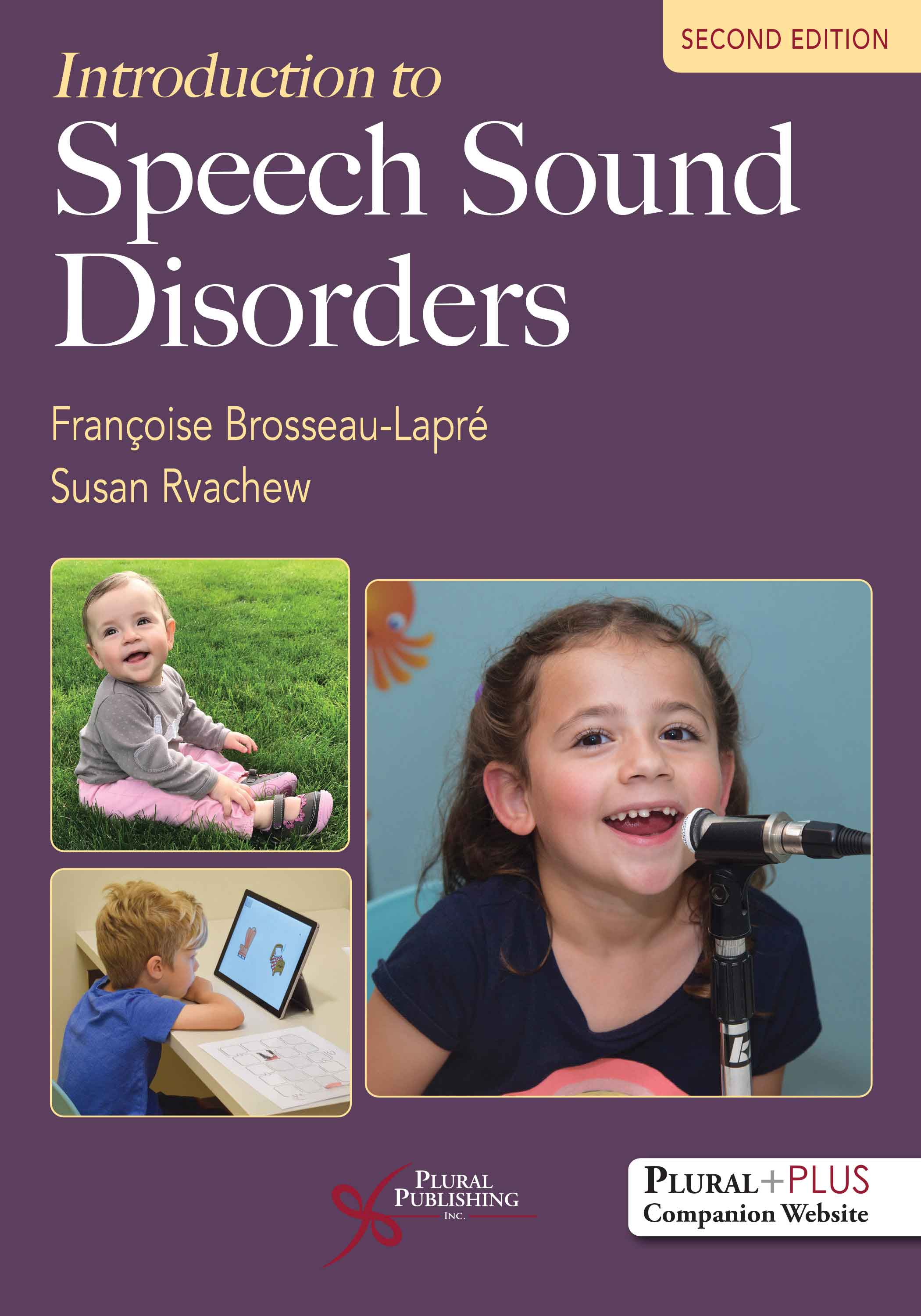
Introduction to Speech Sound Disorders
Second Edition
Françoise Brosseau-Lapré, Susan Rvachew
Details: 325 pages, 2-Color, Softcover, 7" x 10"
ISBN13: 978-1-63550-842-0
© 2028 | Coming Soon
Release Date: 10/22/2026
For Instructors
Purchase
Available for purchase starting 10/15/2026
Print Book: $134.95
eBook: $134.95
Introduction to Speech Sound Disorders, Second Edition is a comprehensive and evidence-based textbook designed specifically for undergraduate speech sound disorders courses in communication sciences and disorders programs. Written by experienced clinicians, educators, and researchers, this accessible text provides students with the foundational knowledge and clinical reasoning skills needed to understand typical and atypical speech development, assess and diagnose speech sound disorders, and plan effective intervention. Its carefully sequenced organization builds student competence from core phonetic and phonological concepts through assessment, diagnosis, treatment planning, and evidence-based intervention approaches.
Ideal for both new and experienced instructors, the Second Edition combines clear explanations, clinical examples, engaging learning activities, and extensive instructional resources to support teaching and student success. Students are introduced to contemporary perspectives on speech sound disorders while developing the novice-level clinical competencies needed for graduate study and early supervised practice.
New to the Second Edition
- New chapter devoted to assessment and intervention for multilingual children with speech sound disorders
- Expanded coverage of current classification systems and subtypes of speech sound disorders
- Updated research and evidence-based content throughout all chapters
- Enhanced discussion of speech perception, phonological development, and treatment planning
- Revised intervention chapters featuring contemporary input-oriented, output-oriented, and phonological approaches
Key Features
- Comprehensive coverage of phonetics, phonology, speech development, assessment, diagnosis, and intervention
- Detailed clinical examples, illustrations, tables, and figures that enhance student understanding
- Learning objectives and practice activities in every chapter
- Key Point boxes that reinforce essential concepts and terminology
PluralPlus Online Ancillaries
For instructors: PowerPoint Slides, Test Bank, Videos Links, Case Studies, Class Activities/Exercises, Syllabus, Answer Keys
For students: Quizzes
Contents
Preface
Acknowledgments
Chapter 1. Concepts in Phonetics and Phonology
1.1 Phonetic Concepts
1.1.1 Articulatory Phonetics
1.2 Describing Articulatory Knowledge
1.2.1 International Phonetic Alphabet
1.2.2 Broad and Narrow Transcription of Speech
1.2.3 Visual Analysis of Articulation
1.3 Describing Perceptual Knowledge
1.3.1 Continuous Versus Discrete Nature of Speech Information
1.3.2 Categorical Perception
1.4 Phonological Concepts
1.4.1 Phones, Phonemes, and Allophones
1.4.2 Phonotactic Rules
1.4.3 Nonlinear Phonology
1.4.4 Prosody
1.4.5 Syllabifying Words
1.4.6 Consonant Features in Nonlinear Phonology
1.4.7 Phonological Error Patterns
Chapter 2. Phonological Development
2.1 Speech Perception Development
2.1.1 Infants
2.1.2 Toddlers
2.1.3 Preschoolers
2.1.4 School-Age Children
2.2 Early Speech Production Development
2.2.1 Prelinguistic Vocal Development
2.2.2 First Words
2.3 Phonological Development
2.3.1 Phoneme Acquisition Norms
2.3.2 Phonological Error Pattern Norms
2.3.3 Acquisition of Prosodic Units
Chapter 3. Assessment
3.1 Purposes of Evaluation
3.1.1 Screening Assessments
3.1.2 Diagnostic Assessments
3.2 Types of Measurement Tools
3.2.1 Standardized Versus Informal Measurement Tools
3.2.2 Norm-Referenced Versus Criterion-Referenced Measurement Tools
3.2.3 Static Versus Dynamic Measurement Tools
3.3 Planning the Assessment
3.3.1 Referral
3.3.2 Case History
3.4 Components of the Speech Assessment
3.4.1 Norm-Referenced Single-Word Articulation/Phonology Test
3.4.2 Stimulability Testing
3.4.3 Oral Mechanism Examination
3.4.4 Continuous Speech Sample
3.4.5 Hearing Screening
3.4.6 Inconsistency and Variability Assessment
3.4.7 Intelligibility
3.4.8 Participation
3.4.9 Language Screening or Test
3.4.10 Phonological Processing
Chapter 4. Diagnosis
4.1 Classification of Speech Sound Disorders
4.2 Subtypes of Speech Sound Disorders
4.2.1 Articulation Disorder
4.2.2 Phonological Disorder
4.2.3 Inconsistent Phonological Disorder
4.2.4 Childhood Apraxia of Speech
4.2.5 Procedure for Classifying SSD Subtypes
4.3 Epidemiology of SSD
4.3.1 Prevalence of SSD
4.3.2 Co-occurring Conditions
4.3.3 Short- and Long-Term Outcomes
Chapter 5. Treatment Planning
5.1 Deciding Whether to Provide an Intervention
5.1.1 Norm-Referenced Approach
5.1.2 Medical Approach
5.1.3 International Classification of Functioning, Disability, and Health Framework
5.1.4 Recommended Protocol for Deciding When to Treat
5.2 Service Delivery Options
5.2.1 Intensity of Intervention
5.2.2 Intervention Agents
5.3 Intervention Goals
5.3.1 Types of Goals
5.3.2 Goal Attack Strategies
5.3.3 Selecting Goals
5.4 Monitoring Treatment Progress
5.4.1 Instructional Objectives
5.4.2 Generalization
5.4.3 Evidence-Based Practice
Chapter 6. Input-Oriented Approaches
6.1 Rationale for the Input-Oriented Approach
6.2 Focused Stimulation
6.3 Ear Training
6.4 Dialogic Reading
Chapter 7. Output-Oriented Approaches
7.1 Rationale for the Output-Oriented Approach
7.2 Vocal Play
7.3 Sensorimotor Therapy
7.3.1 Nonsense Syllable Drills
7.3.2 Sensorimotor Therapy Procedures
7.4 Traditional Articulation Therapy
7.4.1 Ear Training
7.4.2 Establishment
7.4.3 Stabilization of New Phonemes
7.4.4 Transfer and Maintenance
Chapter 8. Phonological Approaches
8.1 Rationale for a Phonological Approach
8.2 Word-Based Phonology: Core Vocabulary Approach
8.3 Phonological Patterns: Cycles Remediation Approach
8.4 Meaningful Minimal Pairs Procedure
8.5 Metaphonological Knowledge
8.5.1 Speech Therapy Procedures That Promote Phonological Awareness
8.5.2 Structured Emergent Literacy Interventions
8.5.3 Reading and Spelling Interventions
8.6 Concluding Thoughts on Intervention Approaches
Chapter 9. Multilingual Children
9.1 Considerations for Assessment
9.2 Considerations for Intervention
9.3 Working With Interpreters
References
Index

Françoise Brosseau-Lapré
Françoise Brosseau-Lapré, PhD, CCC-SLP, worked as a speech-language pathologist in pediatric health care for several years before taking a position at Purdue University in 2013 where she is currently an Associate Professor of Speech, Language, and Hearing Sciences. Her research focuses on speech development and disorders, with the goal of better understanding subtypes of speech sound disorders and predictors of persistent speech errors and literacy difficulties to develop more effective intervention strategies for children with speech sound disorders.
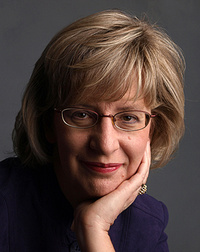
Susan Rvachew
Susan Rvachew, PhD, S-LP(C), ASHA Fellow, worked as a speech-language pathologist in pediatric health care for 20 years before taking a position at McGill University in 2000 where she taught speech-language pathology students until her retirement in 2025. Her research is concerned with phonological development and disorders and the development of more effective interventions for children with speech sound disorders. She has also conducted research on emergent literacy skills and the prevention of reading disabilities in young children. She has published over 100 articles and chapters on these topics.
Introduction to Speech Sound Disorders, Second Edition comes with access to supplementary student and instructor resources on a PluralPlus companion website.
The companion website is located at: https://www.pluralpublishing.com/publication/issd2e
STUDENTS:
The student resources include Quizzes.
To access the student resources, you must register on the companion website and log in using the access code located in the front of your textbook.
INSTRUCTORS:
The instructor resources include PowerPoint Slides, Test Bank, Videos Links, Case Studies, Class Activities/Exercises, Syllabus, Answer Keys. You will also have access to all of the student resources listed above.
To access the instructor resources, you must contact Plural Publishing, Inc. to be verified as an instructor and receive your access code.
Email: instructormaterials@pluralpublishing.com
Tel: 866-758-7251 (toll free) or 858-492-1555
*Note for students: If you have purchased this textbook used or have rented it, your access code will not work if it was already redeemed by the original buyer of the book. Plural Publishing does not offer replacement access codes for used or rented textbooks.
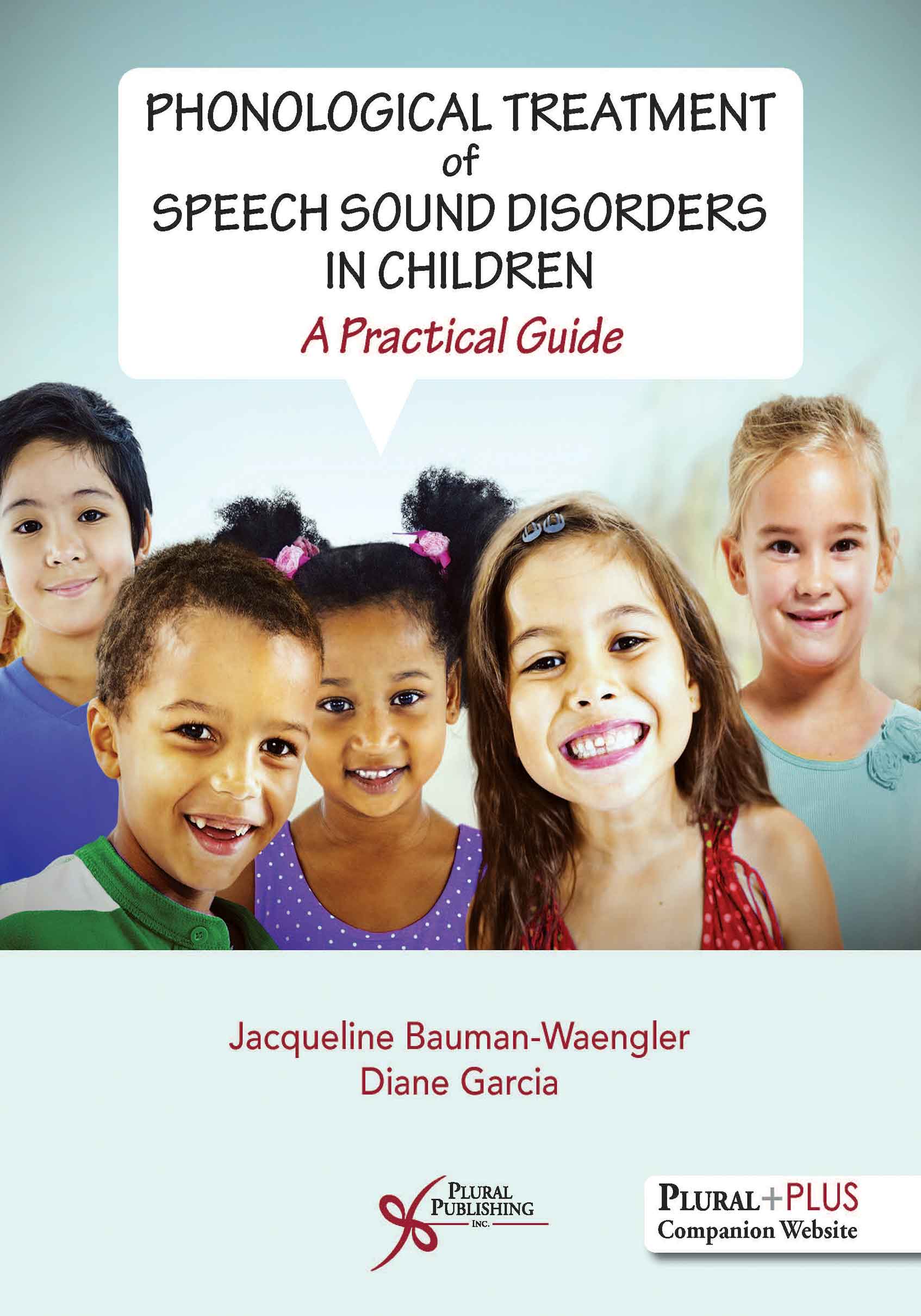
Phonological Treatment of Speech Sound Disorders in Children: A Practical Guide
First Edition
Jacqueline Bauman-Waengler, Diane Garcia
Details: 316 pages, B&W, Softcover, 8.5" x 11"
ISBN13: 978-1-63550-027-1
© 2019 | Available
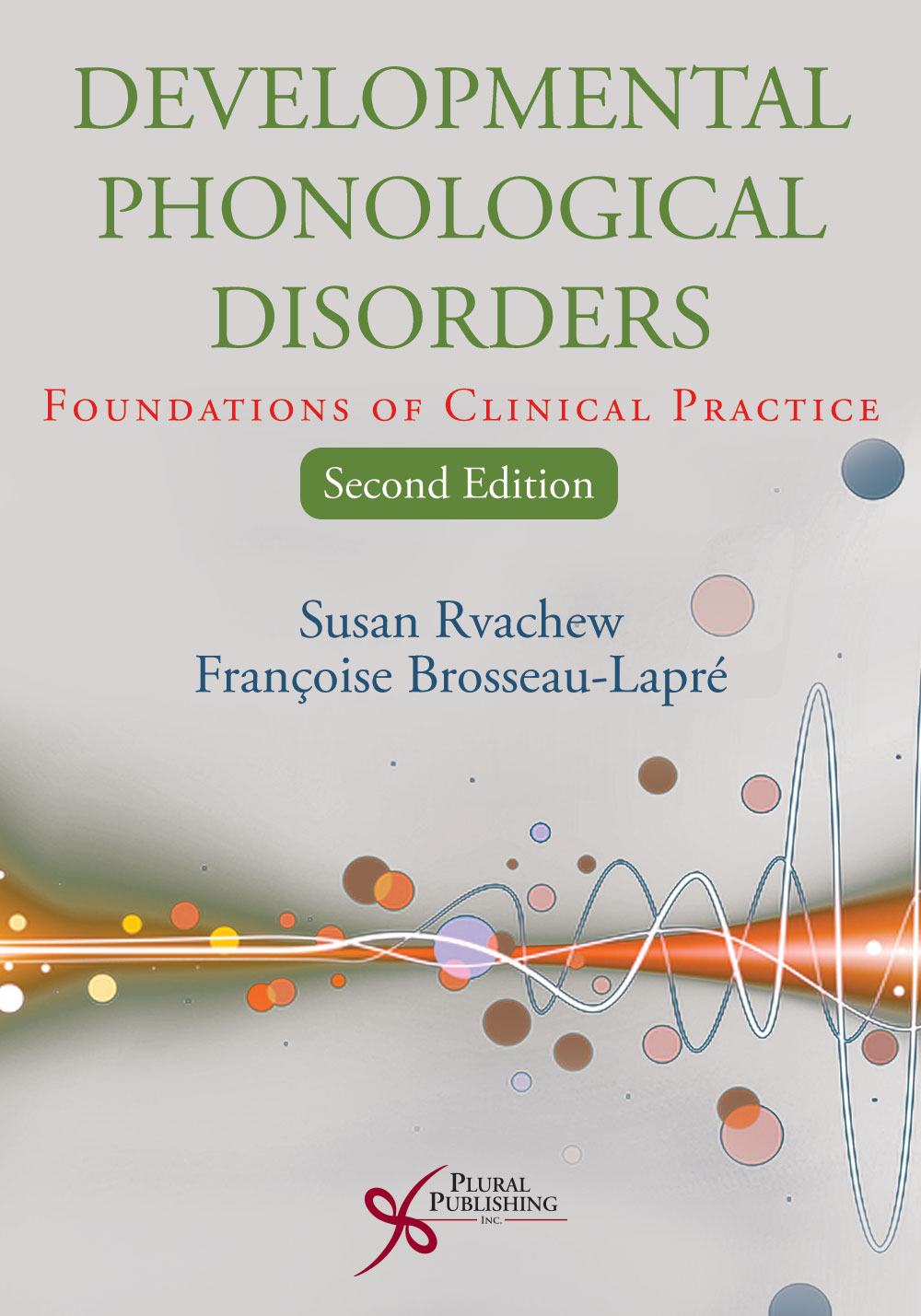
Developmental Phonological Disorders: Foundations of Clinical Practice
Second Edition
Susan Rvachew, Françoise Brosseau-Lapré
Details: 624 pages, B&W, Softcover, 8.5" x 11"
ISBN13: 978-1-59756-717-6
© 2018 | Available
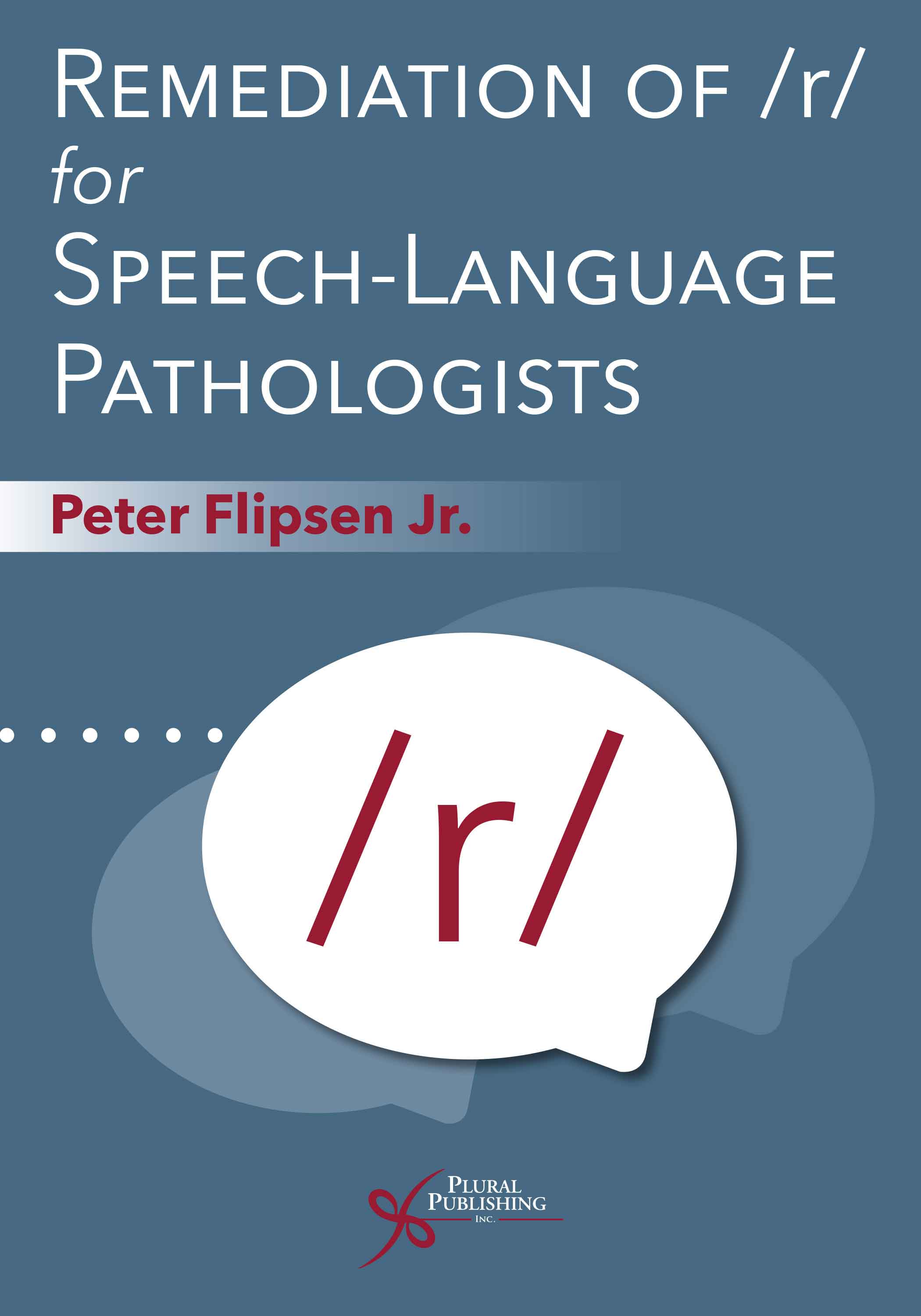
Remediation of /r/ for Speech-Language Pathologists
First Edition
Peter Flipsen Jr.
Details: 228 pages, B&W, Softcover, 7" x 10"
ISBN13: 978-1-63550-287-9
© 2022 | Available
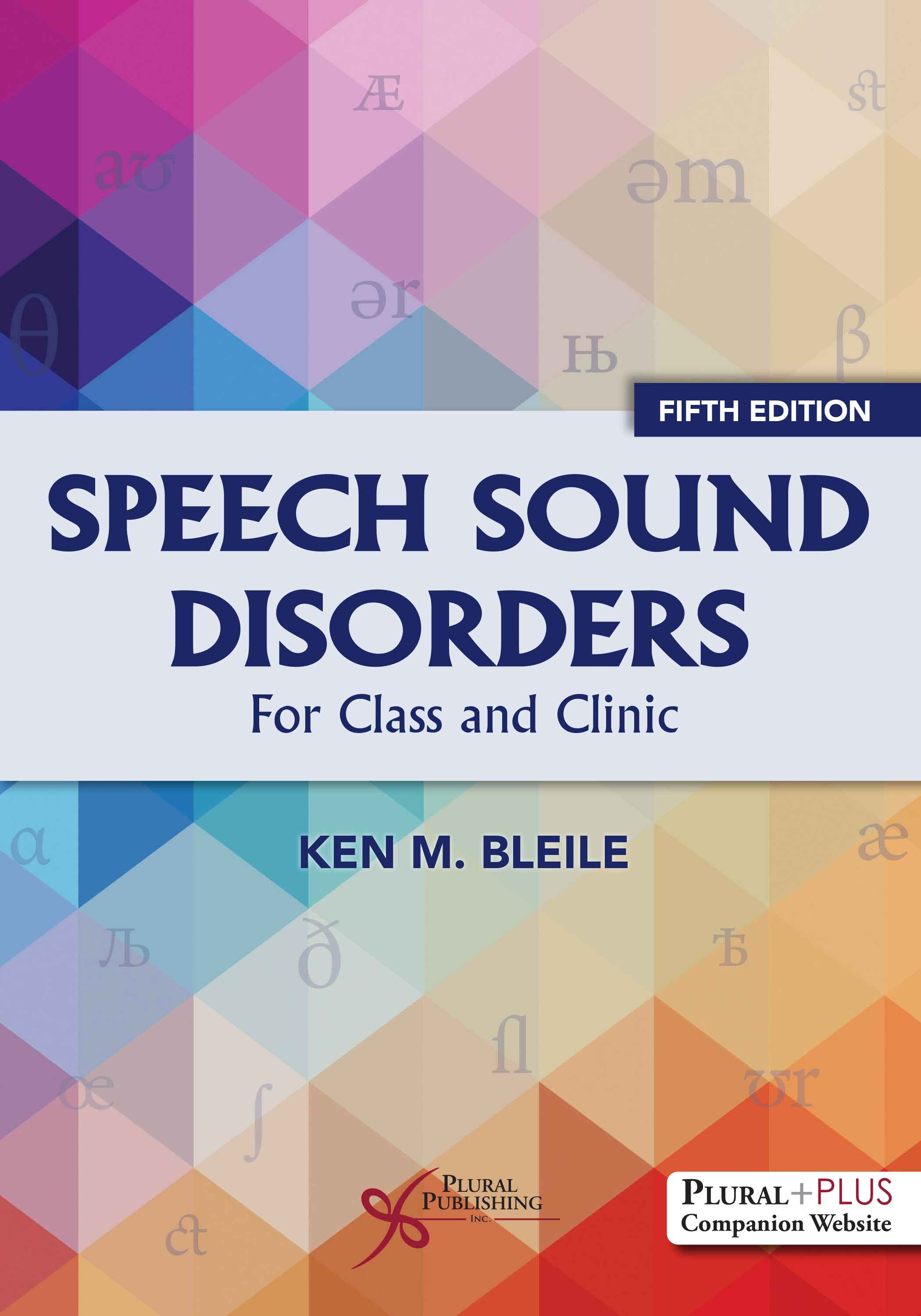
Speech Sound Disorders: For Class and Clinic
Fifth Edition
Ken M. Bleile
Details: 495 pages, B&W, Softcover, 7" x 10"
ISBN13: 978-1-63550-662-4
© 2025 | Available