

Introduction to Child Language Disorders: Evidence-Based Assessment and Intervention
First Edition
Shari Robertson, Jennifer L. Schultz, Rachel K. Powell
Details: 484 pages, Full Color, Softcover, 8.5" x 11"
ISBN13: 978-1-63550-789-8
© 2028 | Available
For Instructors
Purchase
Introduction to Child Language Disorders: Evidence-Based Assessment and Intervention provides a comprehensive, accessible, and clinically grounded introduction to the nature, identification, and treatment of language disorders in children from infancy through adolescence. Written specifically for undergraduates and speech-language pathology assistant (SLPA) students, this engaging text bridges foundational theory with real-world practice, equipping future communication sciences and disorders professionals with the knowledge and confidence they need as they move into clinical coursework.
Grounded in current research and aligned with contemporary models of language development, the text first establishes a strong foundation in typical language acquisition across subdomains—pragmatics, vocabulary, early word combinations, and syntax—before guiding students through the characteristics and underlying mechanisms of language disorders. Readers explore developmental language disorder (DLD), and assessment and intervention for language disorders across the spectrum of language learners, from prelinguistic communicators through adolescence. Specific techniques for assessment and intervention addressing vocabulary, syntax, pragmatics, and written communication are presented. Special attention is given to language challenges associated with autism spectrum disorder, Down syndrome, fetal alcohol spectrum disorders (FASD), and other neurodevelopmental conditions, as well as to the use of augmentative and alternative communication and the impact of cultural and linguistic diversity on assessment and intervention.
Throughout the book, complex concepts are presented in clear, student-friendly language. Case studies, clinical snapshots, and guided application activities help students connect theory to practice and develop critical thinking skills. Emphasis is placed on evidence-based assessment and intervention, collaborative practice, family-centered care, and culturally responsive service delivery, preparing students to meet the needs of diverse children and families in school, clinic, and community settings.
By the end of the text, students will not only understand the “what” and “why” of child language disorders but will also begin to develop the clinical reasoning skills necessary for effective, ethical practice.
Key Features
- Comprehensive coverage of typical and atypical language development from birth through adolescence
- Numerous full-color graphics in every chapter to enhance visual learning
- In-depth exploration of DLD and language disorders associated with neurodevelopmental conditions, with a focus on strengths-based intervention
- Clear explanations of core language domains: grammar/form (phonology, morphology, syntax), semantics, and pragmatics
- Dedicated coverage of culturally and linguistically responsive evaluation and treatment within each chapter
- Case studies and clinical snapshots that connect theory to real-world practice
- Chapter learning objectives, key terms, review questions, and application activities to support student mastery
- Integration of current research with practical clinical insights
- Focus on collaborative practice and family-centered care
- Content dedicated to language disorders in a digital world
PluralPlus Online Ancillaries
For instructors: Instructor’s Manual, PowerPoint Slides, Test Bank, Videos, Case Studies, Class Activities, Syllabus, and Classroom Assignments/Projects with Rubrics, Discussion Prompts, and Additional Resources
For students: Quizzes, eFlashcards, Videos, Case Studies, Forms/Documents, Additional Resources and Readings, Podcast Chapter Summaries
Contents
Preface
About the Authors
Dedication
Chapter 1. Foundations of Language Disorders
The Properties of Language
Language Is Rule-Governed
Language Is a Social Tool
Language Is a Generative System
The Components of Language
Language Form
Language Content
Language Use
Communicative Competence
The Modes of Language
Language Development in Context
Child Development
Developmental Domains
Language and Literacy Grow Together
The Language-Literacy Hierarchy
The Effects of Delayed or Disordered Oral Language on Academic Success
Introduction to Language Disorders
Evidence-Based Practice
Core Principles of Evidence-Based Practice
The EBP Process
Summary and Looking Ahead
Chapter 2. Developmental Language Disorders
DLD: What’s in a Name?
DLD: A Neurodevelopmental Brain-Based Disorder
Diving Deeper into DLD
Is it All About Language?
Diagnosing DLD
Disruptions to Learning and Communication
Persistence and Prognosis
Not a Component of other NDDs
Co-occurrence of DLD and Other Developmental Conditions
Identification and Assessment of DLD
Step 1: Referral
Step 2: Assessment
Step 3: Identification of Additional Factors
Evidence-Based Intervention for Children With DLD
Language-Based Intervention Targets
Nonlinguistic Considerations
Summary and Looking Ahead
Chapter 3. Foundations of Assessment for Language Disorders
Why Do We Assess?
Screening
Differential Diagnosis and Identification of Needs
Treatment Planning
Progress Monitoring
What Do We Assess?
How Do We Assess?
Prereferral Screening
Referral
Postreferral Screening
Case History
Testing
Interpretation
Strengths and Needs
Documentation and Reporting
Treatment Recommendations
Summary and Looking Ahead
Chapter 4. Foundations of Language Intervention
Levels of Intervention
Primary Intervention/Prevention
Secondary Intervention
Tertiary Intervention
EBP and Language Intervention
Clinical Decision-Making
Best Available Evidence and Research
Clinical Expertise
Approaches, Techniques, and Goals
Therapy Approaches
Therapeutic Strategies
Therapy Goals
Selecting the Right Approach
Specific Approaches to Intervention
Approaches to Language Intervention
Intervention Goals, Objectives, Strategies and Materials
Goals Are Long-Term
Short-Term Objectives Are SMART
Strategies and Materials
Goal Attack Strategies
Vertical Goal Attack Strategy
Horizontal Goal Attack Strategy
Cyclical Goal Attack Strategy
Implementing Language Therapy
Therapy Session Structure
Direct Intervention Techniques and Skills
Dosage in Language Therapy
Progress Monitoring and Data Collection
The Division of Labor: Roles and Responsibilities of SLPs and SLPAs in Language Intervention
Summary and Looking Ahead
Chapter 5. Prelinguistic and Early Language Learners
The Importance of Early Intervention
EBP Assessment of Infants and Toddlers
Methods and Tools for Assessing Early Language
Differential Diagnosis
Evidence-Based Treatment for Early Language Learners
Coaching Parents in Early Intervention
Individualized Family Service Plans
Parents as Partners (Parent Goal 1)
Building Parent Understanding of Normal Language Development (Parent Goal 2)
Development of Early Pragmatic Skills (Subdomain 1)
Evidence-Based Intervention for Early Language Learners (Parent Goal 3)
Parent-Led Strategies for the Perlocutionary Stage
Parent-Led Strategies for the Illocutionary Stage
Parent-Led Intervention Techniques for the Locutionary Stage
Summary and Looking Ahead
Chapter 6. Preschool Language Learners
Introduction to the Preschool Period
Review of Preschool Development
Oral Language Development
Emergent Literacy
The Development of Play
Evidence-Based Assessment of Preschool Children
Standardized Assessment
Informal Assessment
Play-Based Assessment
Choosing the Right Assessment Tools
Parents as Partners
Interactive Reading Strategies
Language Intervention for Preschool-Aged Language Learners
Intervention Contexts
Early Language Facilitation Techniques
Why Do Language Facilitation Strategies Work?
Turnabouts
Early Vocabulary Intervention
Summary and Looking Ahead
Chapter 7. Language Form: Syntax
Grammar Versus Syntax
The Elements of Syntax
The Building Blocks of Language Form
Phrases
Clauses
Sentence Classification
Clausal Structure
Functions
Evidence-Based Assessment of Syntax
Screening
Standardized Assessment
Language Sample Analysis
Evidence-Based Intervention for Syntax
Order of Intervention
Implicit Treatment Techniques
Explicit Treatment Techniques
Summary and Looking Ahead
Chapter 8. Language Content: Vocabulary
Classifying Vocabulary
Vocabulary Sets
Vocabulary Tiers
Complexity
What Does It Mean to Know a Word?
Vocabulary Development
Indirect Versus Direct Vocabulary Learning
Vocabulary and Children With Language disorders
Evidence-Based Assessment of Language Content Vocabulary Skills
Standardized Assessment
Nonstandardized Assessment
Evidence-Based Intervention for Language Content
Reading Aloud
Targeting Tier 2 Vocabulary
Effective Vocabulary Instruction Does Not Rely on Dictionary Definitions
Graphic Organizers and Visual Vocabulary Strategies
Teach Word Parts (Morphological Awareness)
Summary and Looking Ahead
Chapter 9. Language Use: Conversational, Narrative, and Expository Discourse
Conversational Discourse
Narrative and Expository Discourse
The Structure of Discourse
Adding Some Sparkle
Narrative Discourse
Types of Narrative Discourse
Assessing Narratives
Narrative Sample Elicitation
Narrative Sample Analysis
Dynamic Assessment
EBP Intervention for Narrative Discourse Skills
Using Books to Address Macrostructure
The Author’s Chair
Graphic Organizers
Commercially Available Programs
Intervention for Story Sparkle
Peers as Partners in Narrative Development
Expository Discourse
Expository Discourse Structures
Assessment of Expository Discourse
Review of Current Skills and Concerns
Evaluating Comprehension of Expository Discourse
Assessment of Expressive Expository Discourse
Intervention Strategies for Expository Discourse
Graphic Organizers
Summary and Looking Ahead
Chapter 10. Written Language: Reading and Writing
Oral and Written Language Grow Together
Differences Between Oral and Written Language
Written Language Is a Complex System
The SLP and Reading
Scarborough’s Reading Rope
Evidence-Based Assessment of Written Language
Evidence-Based Intervention for Literacy
Begin With a Book
Phonemic Awareness
Vocabulary
Text Comprehension
Supporting Writing Skills
Summary and Looking Ahead
Chapter 11. Intervention Considerations and Practices for Adolescents With DLD
Adolescents and DLD
Language Is Critical to Academic and Social Success
Key Differences of Language Intervention for Children and Adolescents
Barriers to Intervention
Strategies for Student Success
Evidence-Based Intervention for Adolescents
Listening and Note-Taking
Reading Comprehension
Writing
Social Skills
Nonliteral Language
Self-Advocacy
Summary and Looking Ahead
Chapter 12. Assessing and Treating Language in Context
What Is Context and Why Does It Matter?
The Context of Early Intervention
Preschool Contexts
School-Age Contexts
Contextualizing Assessment
Curriculum-Based Language Assessment
Interviewing Students
Observation of Language Skills in Context
Evaluation of Classroom Work Samples
Contextualized Language Treatment for School-Age Children
Standards-Based Goals
Service Delivery Models
Intervention in Context
Classroom-Based Services
Using the Curriculum as the Context for Intervention
Designing Treatment Activities Using Curriculum Materials
Delivering Treatment Activities
Summary and Looking Ahead
Chapter 13. Language Disorders in a Digital World
Technology and Language Development
Is it All Bad?
Technology and Ethics
Digital Tools for Clinical Management of Language Disorders
Tools for Language Sample Analysis
Apps for Language Screening, Assessment, and Treatment
Generative Artificial Intelligence
Responsible AI Use
Putting Generative AI to Use
Effective AI Prompting and Review of AI Output
Evaluating AI
GenAI and the College Student
Telepractice
The Nuts and Bolts of Telepractice
EBP Assessment via Telepractice
EBP Intervention via Telepractice
Ethics and Teletherapy
Teaching Students With Language Disorders to Interact With the Digital World
Summary and Looking Ahead
Chapter 14. Strengths-Based Intervention for Neurodivergent Learners
Introduction to Strengths-Based Intervention
Neurodiversity
Strengths-Based Intervention
Core Principles of Strengths-Based Intervention
Words Matter
Other Matters Matter
Creating Strengths-Based Intervention Plans
Autism Spectrum Disorder
The History of ASD
Diversity, Neurodiversity, and ASD
Strengths-Based Intervention for Autistic Children
Fetal Alcohol Spectrum Disorder
FASD: Prevalent and Hidden
FASD Versus ASD
Characteristics of FASD
Strengths-Based Intervention for Children With FASD
Strengths of Children With FASD
Down Syndrome
Language Challenges
Strengths-Based Intervention for Children With Down Syndrome
Strengths of Children With Down Syndrome
Attention Deficit Disorder/Attention Deficit Hyperactivity Disorder
Comorbidity With Other Neurodevelopmental Disorders
Characteristics of Children With ADD/ADHD
Clinical Management of ADD/ADHD From a Strengths-Based Perspective
Strengths of Children With ADD/ADHD
Augmentative and Alternative Communication
AAC Facilitates Spoken Communication Development
In AAC, Efficiency Is Key
AAC Facilitates Family and Peer Relationships
Summary and Looking Ahead
Appendices
References
Index
Introduction to Child Language Disorders: Evidence-Based Assessment and Intervention comes with access to supplementary student and instructor resources on a PluralPlus companion website.
The companion website is located at: https://www.pluralpublishing.com/publication/cld1e
STUDENTS:
The student resources include Quizzes, eFlashcards, Videos, Case Studies, Forms/Documents, Additional Resources and Readings, Podcast Chapter Summaries.
To access the student resources, you must register on the companion website and log in using the access code located in the front of your textbook.
INSTRUCTORS:
The instructor resources include Instructor’s Manual, PowerPoint Slides, Test Bank, Videos, Case Studies, Class Activities, Syllabus, and Classroom Assignments/Projects with Rubrics, Discussion Prompts, and Additional Resources. You will also have access to all of the student resources listed above.
To access the instructor resources, you must contact Plural Publishing, Inc. to be verified as an instructor and receive your access code.
Email: instructormaterials@pluralpublishing.com
Tel: 866-758-7251 (toll free) or 858-492-1555
*Note for students: If you have purchased this textbook used or have rented it, your access code will not work if it was already redeemed by the original buyer of the book. Plural Publishing does not offer replacement access codes for used or rented textbooks.
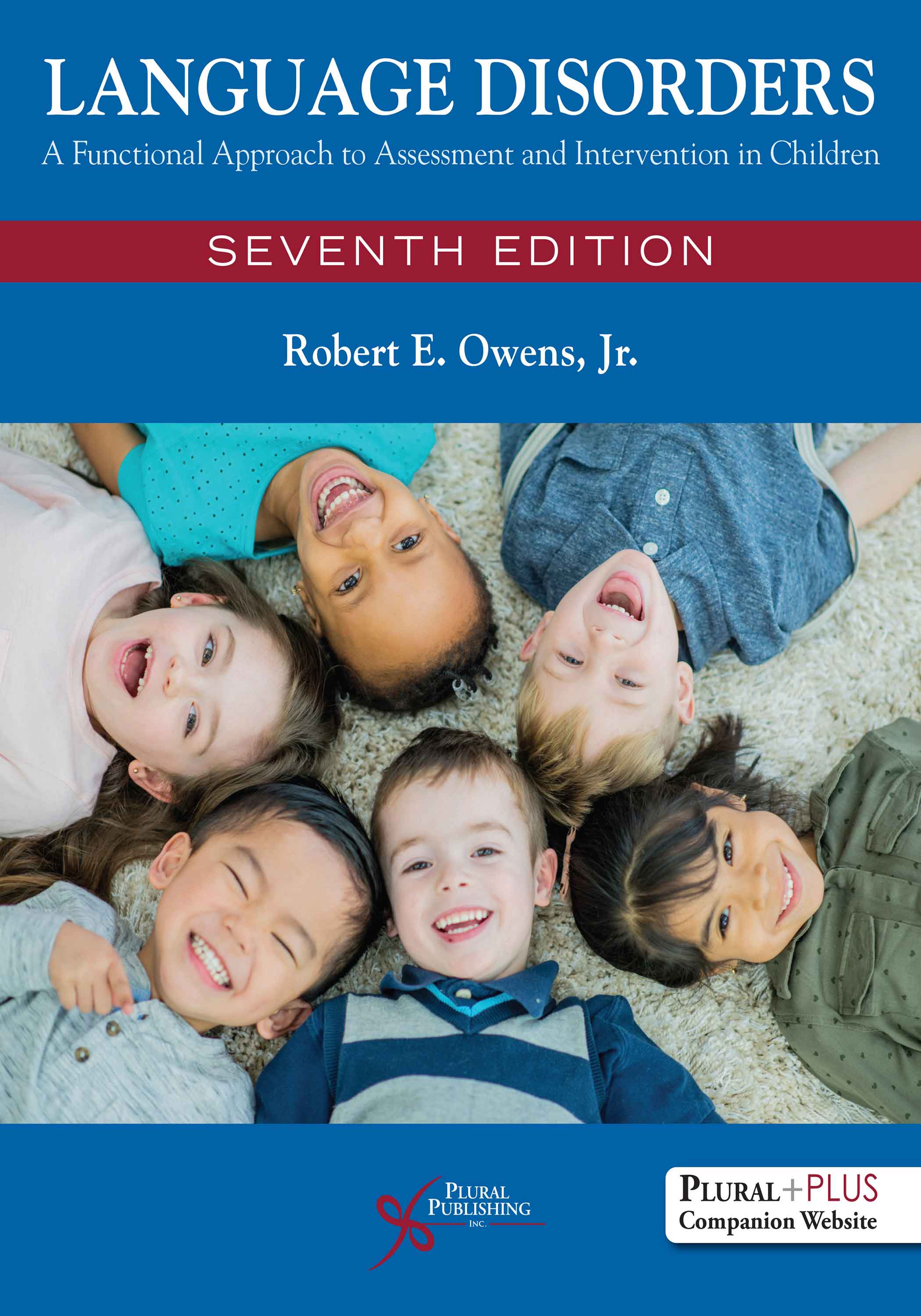
Language Disorders: A Functional Approach to Assessment and Intervention in Children
Seventh Edition
Robert E. Owens, Jr.
Details: 759 pages, 2-Color, Softcover, 8.5" x 11"
ISBN13: 978-1-63550-413-2
© 2024 | Available
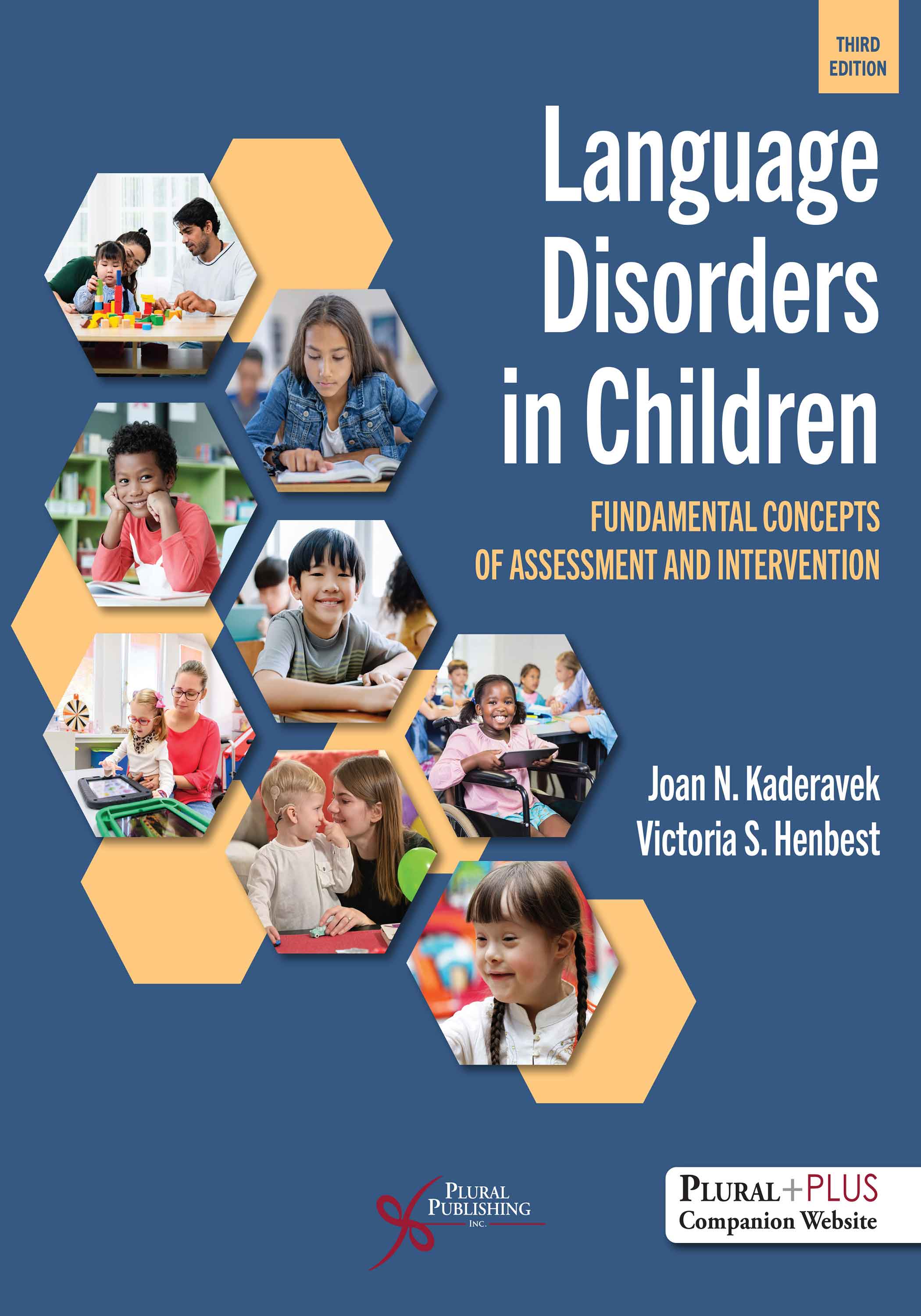
Language Disorders in Children: Fundamental Concepts of Assessment and Intervention
Third Edition
Joan N. Kaderavek, Victoria S. Henbest
Details: 454 pages, 2-Color, Softcover, 8.5" x 11"
ISBN13: 978-1-63550-758-4
© 2026 | Available
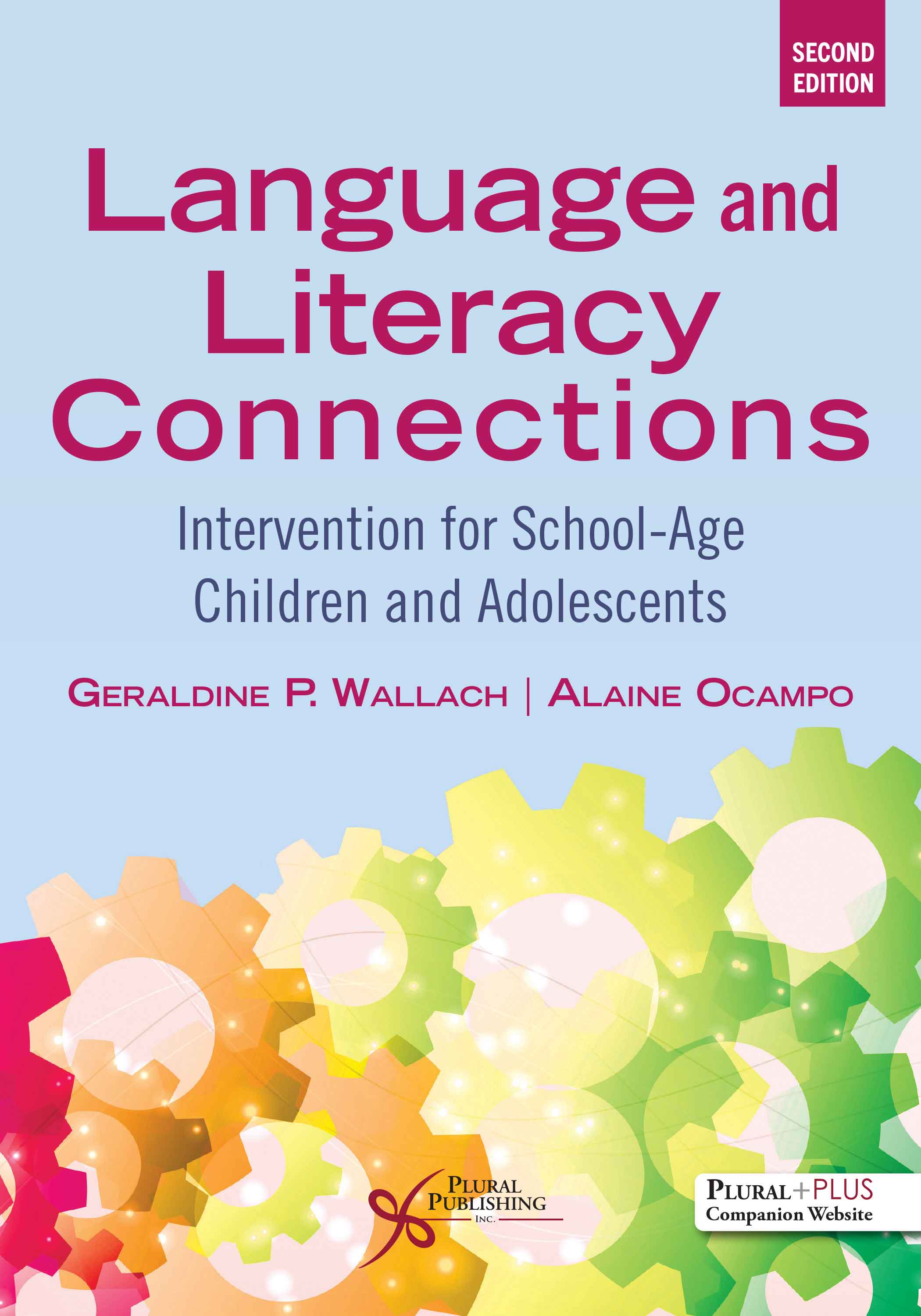
Language and Literacy Connections: Intervention for School-Age Children and Adolescents
Second Edition
Geraldine P. Wallach, Alaine Ocampo
Details: 351 pages, B&W, Softcover, 7" x 10"
ISBN13: 978-1-63550-730-0
© 2026 | Available