
Voice Disorders
Fifth Edition
Christine Sapienza, Bari Hoffman
Details: 566 pages, Full Color, Softcover, 7" x 10"
ISBN13: 978-1-63550-788-1
© 2027 | Available
For Instructors
Purchase Print Book
Price: $159.95
A comprehensive and engaging textbook, Voice Disorders, Fifth Edition offers students and practicing clinicians a contemporary, evidence-based understanding of the anatomical, physiological, and neurological foundations of voice production and the wide spectrum of voice disorders. This textbook covers essential topics such as respiratory and laryngeal anatomy, vocal pathology, evaluation techniques, therapy approaches, phonosurgery techniques, and management of special populations including singers and individuals with head and neck cancer. With new chapters on laryngeal reflexes and the immune system’s impact on voice, as well as expanded coverage of gender-affirming voice care and the effects of pharmacology, this edition reflects the latest clinical research and practice.
This forward-looking text introduces significant updates and expansions that reflect the most current advancements in the field, ensuring students and clinicians have access to cutting-edge information on the evaluation and treatment of voice and upper airway disorders. Designed for graduate students in speech-language pathology and for clinicians seeking advanced training, this book bridges science and practice with clarity and depth. Richly illustrated with full-color anatomical drawings and clinical images, and supported by a robust companion website featuring digital laryngoscopic videos, surgical footage, case examples, and an interactive workbook, Voice Disorders equips readers to evaluate and manage voice disorders across the lifespan. Whether used in the classroom, clinic, or private practice, this authoritative text is an essential resource for anyone committed to excellence in voice care.
Sapienza and Hoffman’s Voice Disorders, Fifth Edition continues its enduring legacy as the leading textbook for courses in voice disorders and an invaluable clinical reference.
New to the Fifth Edition
- A new section exploring emerging technologies in voice evaluation, including cutting-edge developments such as artificial intelligence, machine learning, and voice biomarker research, offering insights into the future of voice diagnostics and personalized care.
- Updated protocols for voice evaluation featuring the most recent advancements in perceptual voice assessment, acoustic measurement tools, and information on the updated CAPE-Vr (Consensus Auditory-Perceptual Evaluation of Voice – revised).
- Revised terminology and definitions that now reflect current consensus and clinical relevance, notably including updated terms such as inducible laryngeal obstruction (ILO), exercise-induced laryngeal obstruction (EILO), and cough hypersensitivity syndrome, ensuring clarity and alignment with evolving diagnostic frameworks.
- A new dedicated chapter examining upper airway disorders associated with laryngeal reflexes.
- An expanded discussion on the management of head and neck cancers, providing a more comprehensive overview of interdisciplinary strategies and clinical considerations with updated illustrations
- An updated review of drug interactions, providing a comprehensive overview of pharmacologic considerations relevant to voice and airway disorders. This section highlights potential interactions that may influence treatment outcomes and vocal function, serving as a critical reference for informed clinical decision-making.
- More than 100 new and updated references to support clinical decision-making and research integration.
- New chapter-specific testing questions to aid in student comprehension and retention. These comprehensive enhancements position the Fifth Edition as an essential and up-to-date resource for clinicians, educators, and students, setting a new standard for excellence in the field.
PluralPlus Online Ancillaries
For instructors: PowerPoint Slides, Test Bank, Image Bank, Videos, Audios, Case Studies
For students: Quizzes, eFlashcards, Videos, Audios, Activities/Exercises
Contents
Foreword by Thomas Murry, PhD
Preface
Acknowledgments
About the Authors
Contributors
Companion Website
Chapter 1. Respiratory Anatomy and Physiology
The Lungs
The Trachea
The Bronchi
The Thorax
The Ribs
The Diaphragm
The Abdominal Wall
Sternum
Clavicle
Driving Forces of the Respiratory System
How Does the Human Body Generate These Respiratory Forces?
Passive and Active Forces of the Respiratory System
The Respiratory System and Voice Production
Relaxation Pressure Curve
Using the Right Terminology
Biofeedback Techniques
Summary
References
Chapter 2. Laryngeal Anatomy and Physiology
Laryngeal Anatomy
Laryngeal Structure: Pieces and Parts
Laryngeal Muscles
What Are the Vocal Folds Made of, Exactly?
Laryngeal Ligaments and Membranes
Extrinsic Membranes
Intrinsic Membranes
Ligaments
Aryepiglottic Folds
Cavities
Arterial Supply of the Larynx
Laryngeal Nerve Supply
The Recurrent Laryngeal Nerve
Laryngeal Development (Infancy to Adulthood)
Adult Male and Female Differences in Laryngeal Anatomy
Age Effects on Laryngeal Anatomy
Phonation
Mechanisms for Changing Pitch
What Is a Vocal Register?
Mechanism for Changing Loudness
Summary
References
Chapter 3. Vocal Health
Phonotrauma: Terminology, Implications, and Clinical Relevance
Basic Issues Related to Vocal Health
Recovery Process
Contributors to Poor Vocal Health
Summary
References
Chapter 4. Evaluation
The Specialty of Otolaryngology
Case History
The Physical Examination
Laryngoscopic Techniques
Instrumental Assessment
Imaging
Digital Laryngostroboscopy
Videokymography
Aerodynamics
Classic Methods for Collection of Aerodynamic Signals
Laryngeal Aerodynamic Variations
Laryngeal Aerodynamics as a Function of Aging
Laryngeal Aerodynamic Differences as a Function of Sex
Laryngeal Aerodynamic Changes as a Function of Speech Task
Using Aerodynamics for Examination of Voice Disorders
Acoustic Analysis of Voice
Intensity
Voice Range Profile
Short-Term Perturbation
Relative Noise Level
Spectral Measures
Fast Fourier Transform (FFT)
Vowel Spectrum
Long-Term Average Spectrum
Cepstral Peak
Electroglottography
Electromyography
Auditory-Based Measures of Voice Quality
Indices Obtained by Combining Measurements
Perceptual Rating Scales
Voice Handicap Scales and Quality-of-Life Scales
Voice Handicap Index
Voice-Related Quality-of-Life Scale
Hygiene and Safety of Equipment
Summary
References
Appendix 4–1. Case History Form—Voice
Appendix 4–2. Laryngostroboscopy Rating Form
Appendix 4–3. Voice Handicap Index
Appendix 4–4. Voice-Related Quality-of-Life Measure
Appendix 4–5. Recommended Protocols
Chapter 5. Vocal Pathology
Etiology of Voice Disorders
Vocal Lesions
Pathology Classifications
Incidence of Voice Disorders
Structural Pathologies of the Vocal Folds
Vascular Lesions
Functional Voice Disorders
Upper Airway Disorders
Autoimmune
Summary
References
Chapter 6. Neurologically Based Voice Disorders
Neurologic Voice Disorders
Other Neurologic Cases
Summary
References
Chapter 7. Vocal Rehabilitation
Addressing Patient Differences in Vocal Rehabilitation
Clinical Competence
The Road to Therapy
Communication Strategies
Adherence
Voice Therapy
The Evolving Process of Voice Therapy
Goals of Voice Therapy
Definition of Treatment Efficacy
Voice Therapy Approaches: What Are They?
Specific Treatments for Other Populations
Special Considerations for Gender-Affirming Voice and Communication Therapy
Voice Therapy for School-Age Children With Voice Disorders
Technology and Gaming in Voice Therapy
Biofeedback Techniques
Alternative Voice Management
Defining a Voice Outcome
Criteria for Termination of Therapy
Telehealth Options
Definition of Treatment Effectiveness
Summary
References
Appendix 7–1. Voice Stimuli
Chapter 8. Management: Phonosurgery
Surgical Treatment of Dysphonia
Awake Procedures
General Considerations in the Surgical Approach to the Larynx
Microlaryngoscopy With Nodule Removal
Microflap Dissection
Laser Laryngoscopy
Laryngeal Microdebrider Dissection
Injection Augmentation
Laryngeal Framework Surgery
Selected Clinical Cases
For Further Reading: Innovations and Evidence in Phonosurgery
Suggested References for Reading
Appendix 8–1. Postoperative Instructions for Surgery of Vocal Fold Lesions
Chapter 9. Team Management of Head and Neck Cancer
Introduction
Head and Neck Cancer Statistics
Head and Neck Cancer Sites
Head and Neck Cancer Types
Head and Neck Squamous Cell Cancers
General Cancer Staging
Primary Tumor Staging by Site
Larynx—Subdivided into Three Sites: Supraglottic, Glottic, and Glottic
Cancer Spread
Surgical Options for Treating Head and Neck Cancer
Organ Preservation Through Radiation and Chemotherapy
Combined Management Approaches
Multidisciplinary Clinical and Research Team
Surgical Options for Laryngeal Cancer
The Role of the Speech-Language Pathologist Prior to Laryngectomy
The Role of the Speech-Language Pathologist Following Laryngectomy
Types of Partial Laryngectomy Procedures
Postoperative Strategies
Communication Following Total Laryngectomy
Developing a System to Track Outcomes With the HNC Population
Future Directions
Conclusions
Useful Websites
References
Appendix 9–1. Case Example: Management of SCCA In Situ in a Professional Performer: An Interdisciplinary Approach
Appendix 9–2. Case Example: Management of Recurrent Laryngeal Cancer Spanning 10 Years
Appendix 9–3. Voicing Practice Exercises: Handout for the Laryngectomized Patient
Chapter 10. Vocal Performance
What Constitutes Singing Voice Intervention?
The Singing Voice
The Voice Care Team
Performer Classifications and Vocal Registers
Etiology of Dysphonia in Vocal Performers
Compensatory and Cover Techniques Used by Vocal Performers
Singers and Support
Clinical Assessment of Vocal Performers
The Medical, Social, and Singing History
Speaking Voice Assessment
Vocal Load
Vocal Pacing and Budgeting
Singing Voice Assessment
Training and Techniques Specific to Performance Voice
Case Examples
Singing Health
Professional Associations
Case Studies
Summary
References
Appendix 10–1. Singer’s History Form
Appendix 10–2. Singing Voice Handicap Index (S-VHI)
Appendix 10–3. Evaluation of the Ability to Sing Easily (EASE)
Appendix 10–4. Glossary of Singing Terms
Chapter 11. Drug Types and Effects on Voice
Drug Interactions
Patient-Specific Factors
Drug Administration
Drug Classes
Psychoactive Medications
Drug Compliance
Herbal Supplements and Alternative Medicines
Special Populations
Summary
Recommended Readings
References
Appendix 11–1. Chapter 11 Glossary
Chapter 12. Immune System Response to Diseases and Its Impact on Laryngeal Function
Introduction
Innate Immunity and Wound Healing
Adaptive Immunity
Fibroblasts’ Immune Functions
Immunologic Barriers to Treatment
Biomaterials
Cell-Based Therapies
Conclusions
References
Chapter 13. Laryngeal Reflexes in Upper Airway Disorders: Foundations for Clinical Practice
Sensory Receptors
Free Nerve-Ending Receptors
Encapsulated Nerve Endings
Pathway of Sensory Information
Laryngeal Reflexes
Upregulation of Sensory Afferents
Down Regulation of Sensory Afferents
Summary
References
Glossary
Index

Christine Sapienza
Dr. Christine Sapienza, PhD, CCC-SLP, is a nationally recognized academic leader, researcher, and innovator in health care and higher education. She currently serves as executive vice president for partnerships and development at Jacksonville University (JU), following a transformative tenure as provost and founding dean of the Brooks Rehabilitation College of Healthcare Sciences. Her leadership helped launch JU’s flagship graduate health programs, state-of-the-art simulation labs, and the foundation for a new College of Osteopathic Medicine.
Internationally known for her pioneering research on the interaction between voice and respiratory function, Dr. Sapienza has built a career advancing the science and clinical care of neurorehabilitation. She co-invented the Expiratory Muscle Strength Trainer, now used worldwide to improve respiratory and vocal function in clinical populations. Her work has been supported by the National Institutes of Health, US Department of Veterans Affairs, and other major funding agencies. She has authored over 125 peer-reviewed publications and the widely adopted textbook Voice Disorders.
Dr. Sapienza is also a dedicated educator and mentor, having guided dozens of doctoral students and received multiple honors for excellence in teaching and research. As cofounder of the Women’s Health Innovation Network, she champions women’s health through science, entrepreneurship, and cross-sector collaboration. She has served on numerous nonprofit boards, advancing health-care and education initiatives across the region.

Bari Hoffman
Bari Hoffman, PhD, CCC-SLP, is an associate dean for clinical affairs and healthcare innovation in the College of Health Professions and Sciences and professor in the Department of Communication Sciences and Disorders, with a joint appointment in internal medicine within the College of Medicine at the University of Central Florida. A nationally recognized academic leader, Dr. Hoffman brings extensive expertise in clinical practice, scientific inquiry, and strategic leadership across health professions education and health-care innovation.
Internationally regarded for her contributions to clinical voice care and voice/speech science, Dr. Hoffman’s work focuses on the acoustic, aerodynamic, and endoscopic analysis of voice and laryngeal function disorders, spanning professional voice users, individuals with head and neck cancer, complex neurologic conditions, and upper airway disorders. For more than two decades, Dr. Hoffman served as director of the Center for Voice Care and Swallowing Disorders at the Ear, Nose, Throat and Plastic Surgery Associates. In this role, she provided clinical care while demonstrating administrative and thought leadership, growing the center’s clinical reach and scholarly productivity.
Dr. Hoffman received her doctoral degree from the University of Florida in 2001. Her current research involves studying novel treatment technologies and biomechanical mechanisms for disorders of laryngeal function while defining the high impact on quality-of-life factors. She implements 3-D computer modeling of upper and lower airway function, coping strategies of individuals with dysphonia, and respiratory muscle strength paradigms in a variety of patient groups. Dr. Hoffman has a significant record of peer-reviewed publications, contributed to more than 25 book chapters, and coauthored two other textbooks: Cases in Head and Neck Cancer: A Multidisciplinary Approach and Respiratory Muscle Strength Training. She actively lectures nationally and internationally on these topics.
A trailblazer in health-care technology integration and higher education leadership, Dr. Hoffman has spearheaded efforts in immersive and AI-driven innovations, including extended reality platforms, smart clinical and home environments, and holoportation/hologram technologies to transform clinical training and interprofessional care. In recognition of her contributions to teaching, research, and service, she has received numerous awards within her university, state, and national associations, including fellowships from both the American Speech-Language-Hearing Association and the National Academies of Practice. Dr. Hoffman’s career reflects a sustained commitment to advancing translational research, pioneering health-care and education innovation, and shaping the future of clinical practice.
Voice Disorders, Fifth Edition comes with access to supplementary student and instructor resources on a PluralPlus companion website.
The companion website is located at: https://www.pluralpublishing.com/publication/vd5e
STUDENTS:
The student resources include Quizzes, eFlashcards, Videos, Audios, and Activities/Exercises.
To access the student resources, you must register on the companion website and log in using the access code located in the front of your textbook.
INSTRUCTORS:
The instructor resources include PowerPoint Slides, Test Bank, Image Bank, Videos, Audios, and Case Studies.. You will also have access to all of the student resources listed above.
To access the instructor resources, you must contact Plural Publishing, Inc. to be verified as an instructor and receive your access code.
Email: instructormaterials@pluralpublishing.com
Tel: 866-758-7251 (toll free) or 858-492-1555
*Note for students: If you have purchased this textbook used or have rented it, your access code will not work if it was already redeemed by the original buyer of the book. Plural Publishing does not offer replacement access codes for used or rented textbooks.
Voice and Communication Therapy for the Transgender/Gender Diverse Client: A Comprehensive Clinical Guide
Third Edition
Richard K. Adler, Sandy Hirsch, Jack Pickering
Details: 412 pages, B&W, Softcover, 7" x 10"
ISBN13: 978-1-94488-330-0
© 2019 | Available
Cases in Head and Neck Cancer: A Multidisciplinary Approach
First Edition
Bari Hoffman, Henry Ho, Christine Sapienza, Jeffrey J. Lehman
Details: 304 pages, Full Color, Hardcover, 8.5" x 11"
ISBN13: 978-1-59756-715-2
© 2016 | Available
Respiratory Muscle Strength Training
First Edition
Christine Sapienza, Bari Hoffman
Details: 279 pages, B&W, Softcover, 6" x 9"
ISBN13: 978-1-63550-257-2
© 2021 | Available
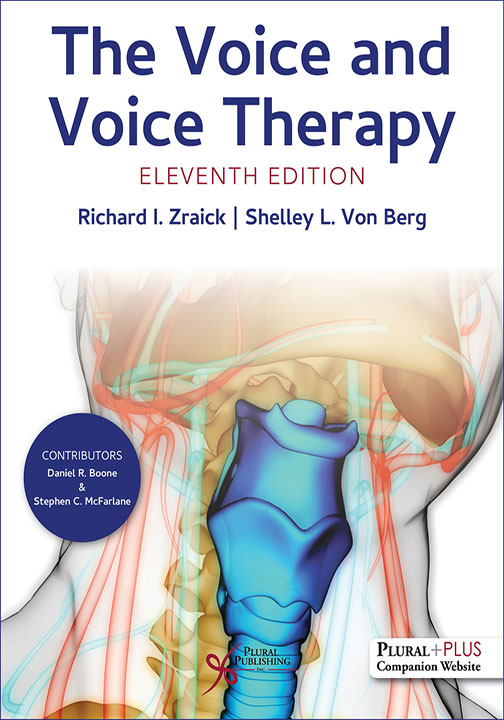
The Voice and Voice Therapy
Eleventh Edition
Richard I. Zraick, Shelley L. Von Berg
Details: 467 pages, Full Color, Hardcover, 8" x 10"
ISBN13: 978-1-63550-762-1
© 2026 | Available
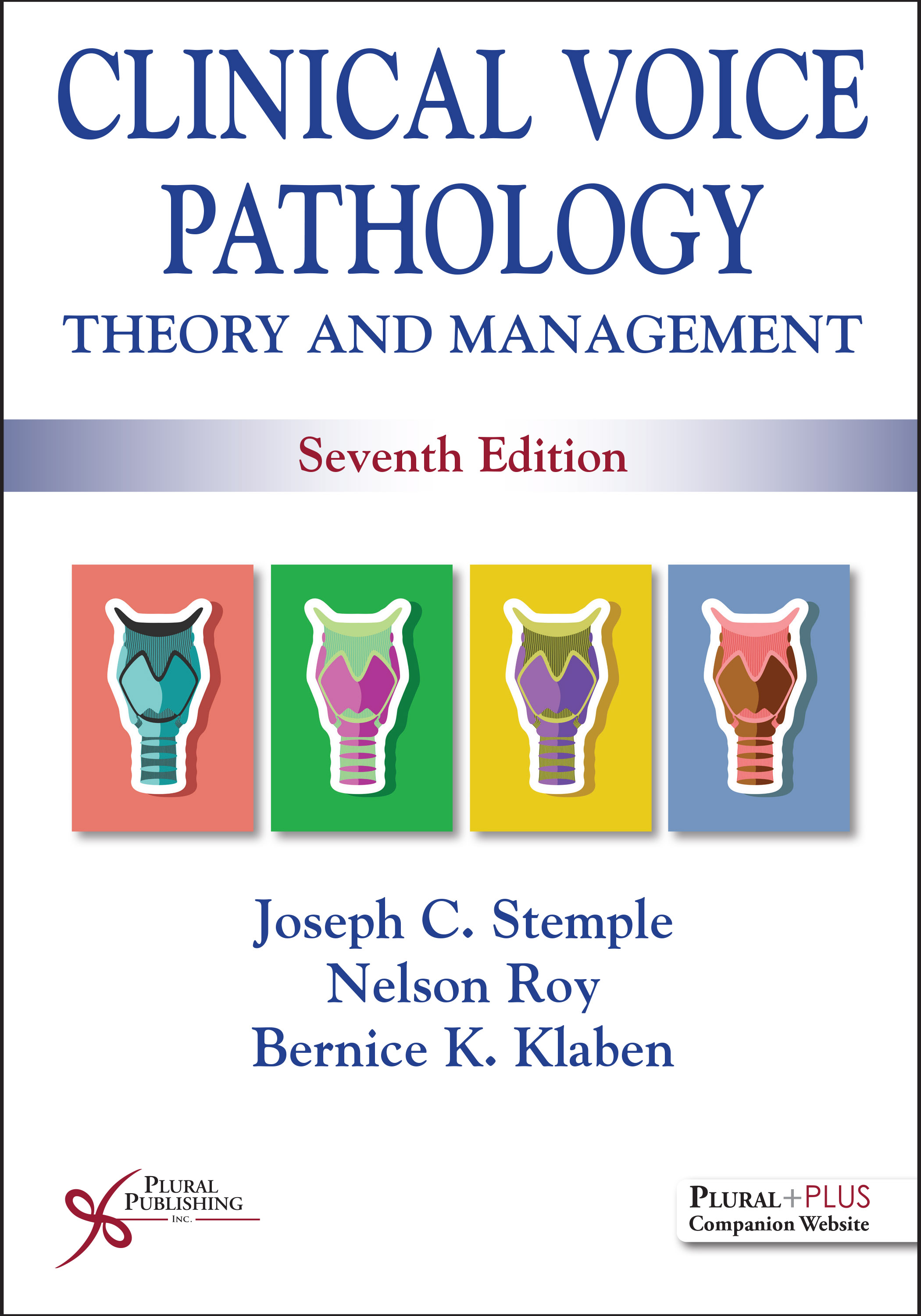
Clinical Voice Pathology: Theory and Management
Seventh Edition
Joseph C. Stemple, Nelson Roy, Bernice K. Klaben
Details: 644 pages, Full Color, Softcover, 7" x 10"
ISBN13: 978-1-63550-618-1
© 2026 | Available
Voice Therapy: Clinical Case Studies
Sixth Edition
Joseph C. Stemple, Edie R. Hapner, Lauren Timmons Sund
Details: 499 pages, B&W, Softcover, 7" x 10"
ISBN13: 978-1-63550-731-7
© 2026 | Available