

Language Development From Theory to Practice
Fourth Edition
Khara L.P. Turnbull, Laura M. Justice
Details: 483 pages, Full Color, Softcover, 8.5" x 11"
ISBN13: 978-1-63550-841-3
© 2028 | Coming Soon
Release Date: 11/13/2026
For Instructors
Purchase
NOW PUBLISHED BY PLURAL!
Turnbull and Justice’s Language Development from Theory to Practice, Fourth Edition provides a multidisciplinary, research-grounded introduction to how language develops from infancy through the school-age years and beyond. The text establishes a foundation in the building blocks, science, and major theories of language development before examining developmental achievements in language form, content, and use. Drawing on perspectives from communication sciences and disorders, linguistics, psychology, education, neuroscience, and related fields, the authors examine how biological, cognitive, social, and environmental factors shape language learning, with particular attention to individual differences across development.
Written in an accessible, student-friendly style, the text takes an integrated approach to theory, research, and practice, demonstrating how each informs the study and application of language development. Students explore developmental milestones and variation, language diversity, and childhood language disorders while learning how researchers and clinicians study and measure children’s language abilities. Throughout, the authors demonstrate how theoretical perspectives and research findings inform evidence-based educational and clinical decision-making, helping students apply foundational knowledge to their future work with children and families. The fourth edition’s science-and-theory coverage also places greater emphasis on translational research and applications in home, classroom, and clinical contexts.
New to the Fourth Edition
- Expanded focus on literacy development, including the Science of Reading, decoding, language comprehension, phonics, and the relationship between oral language and reading achievement
- Broader treatment of language diversity and multilingual development, with current perspectives on bilingualism and multilingualism, code-switching, translanguaging, English Learners, and second language acquisition
- Current approaches to childhood language disorders, including developmental language disorder (DLD), autism spectrum disorder (ASD), and other neurodevelopmental conditions, with updated terminology and research
- Reconceptualized treatment of nature and nurture in language development, integrating neuroscience and environmental influences on language learning, brain development, language processing, sensitive periods, and neuroplasticity
- Updated research and content throughout, complemented by additional data tables and visual elements
Key Features
- Chapter Learning Outcomes aligned with key concepts and skills
- Bolded key terms throughout and an end-of-book glossary reinforce essential terminology
- Theory to Practice boxes offer recommendations for educators and clinicians
- Chapter Summaries reinforce major concepts and developmental principles
- Rich visual supports, including figures, tables, and photos that enhance comprehension
PluralPlus Ancillaries
For Instructors:
- PowerPoint Slides
- Instructor’s Resource Manual with Chapter Learning Outcomes, Class Activities, Discussion Points, Case Studies, and a Test Bank
- Teaching Tips
- Sample Course Syllabus
- LMS Course: A ready-to-use LMS course organized into chapter-aligned modules featuring Learning Outcomes, Assessments, Activities, Videos, and more
For Students:
- Study Quizzes
- eFlashcards
Contents
Preface
Acknowledgments
About the Authors
Chapter 1. Language Development: An Introduction
Learning Outcomes
What Is Language?
Language Defined
Language as a Module of Human Cognition
How Does Language Relate to Speech, Hearing, and Communication?
Speech
Hearing
Communication
What Are the Major Domains of Language?
Form, Content, and Use
Five Domains of Language
What Are Some Remarkable Features of Language?
Acquisition Rate
Species Specificity
Productivity
What Are Sources of Variation in Language Development?
Context of Language Development
Neurodevelopmental Disorders
Summary
References
Chapter 2. Building Blocks of Language
Learning Outcomes
What Is Phonological Development?
Phonological Building Blocks
Influences on Phonological Development
What Is Morphological Development?
Morphological Building Blocks
Influences on Morphological Development
What Is Syntactic Development?
Syntactic Building Blocks
Influences on Syntactic Development
What Is Semantic Development?
Semantic Building Blocks
Influences on Semantic Development
What Is Pragmatic Development?
Pragmatic Building Blocks
Influences on Pragmatic Development
Summary
References
Chapter 3. The Science and Theory of Language Development
Learning Outcomes
Who Studies Language Development?
Basic and Applied Research on Language Development
Scientific Approaches for Studying Language Development
From Bench to Bedside: Importance of Translational Research
Basic-Science Methodologies
Applied Research Methodologies
Prominent Theories of Language Development
Questions Language-Development Theories Should Answer
Major Language-Development Theories
Science and Theory of Language Development: Applications to Real-World Contexts
Home Settings
Classroom Settings
Clinical Settings
Summary
References
Chapter 4. Nature and Nurture in Language Development
Learning Outcomes
Basic Principles of Neuroanatomy and Neurophysiology
Terminology
Neuroscience Basics
Major Structures and Functions of the Human Brain
Cerebrum
Brain Stem
Cerebellum
Language in the Brain
Semantics
Syntax and Morphology
Phonology
Pragmatics
Sensitive Periods and Nurturing Early Language Development
Sensitive Periods Defined
Early Experiences That Nurture Brain and Language Development
Brain Plasticity and Sensitive Periods
Early “Nurture” Experiences That Support Brain and Language Development
Summary
References
Chapter 5. Infancy: Let the Language Achievements Begin
Learning Outcomes
Major Language-Development Milestones in Infancy
Ears on Alert: Infant Speech Perception
What’s the Goal? Awareness of Intentions Underlying Actions
Sorting the World Before Words: Category Formation
From Crying to Conversation (Well, Almost): Early Vocalizations
But Wait...There’s More: Additional Milestones
Major Achievements in Language Form, Content, and Use in Infancy
Language Form
Language Content
Language Use
What Factors Contribute to Individual Differences in Infants’ Language Development?
Intraindividual Differences
Interindividual Differences
How Is Language Development Measured in Infancy?
Measuring Language for Research Purposes: From “Raise Them in Silence” to Neuroimaging Studies, and Everything in Between
Measuring Language for Practical Applications: Screening, Monitoring, and Decision Making
Summary
References
Chapter 6. Toddlerhood: Exploring the World and Experimenting With Language
Learning Outcomes
Major Language-Development Milestones in Toddlerhood
A Cherished Milestone: First Words
When Hands Do the Talking: Gestures and the Transition to Linguistic Communication
What Toddlers Know About What You Know: Theory of Mind
Major Achievements in Language Form, Content, and Use in Toddlerhood
Language Form
Language Content
Language Use
What Factors Contribute to Individual Differences in Toddlers’ Language Development?
Intraindividual Differences
Interindividual Differences
How Is Language Development Measured in Toddlerhood?
Measuring Language for Research Purposes: From Play-Based Tasks to Brain Imaging
Measuring Language for Practical Applications: From Quick Screens to Comprehensive Evaluations
Summary
References
Chapter 7. Preschool: Building Literacy on Language
Learning Outcomes
Major Language-Development Milestones in the Preschool Period
From “Here and Now” to “There and Then”: Decontextualized Language
How Preschoolers Learn to Put Themselves in Others’ Shoes: Theory of Mind
The Beginnings of a New Modality: Early or Emergent Literacy
Major Achievements in Language Form, Content, and Use in the Preschool Period
Language Form
Language Content
Language Use
What Factors Contribute to Individual Differences in Preschoolers’ Language Development?
Intraindividual Differences
Interindividual Differences
Why Opportunity Matters: Socioeconomic Context and Preschoolers' Language Development
How Preschoolers Learn Language From One Another: Peers and Siblings
Do Boys and Girls Talk Differently?
How Is Language Development Measured in the Preschool Period?
Language Sample Analysis for Research and Practical Purposes
Early Detection and Informed Intervention: Clinical Approaches to Preschool Language Assessment
Summary
References
Chapter 8. School-Age Years and Beyond: Developing Later Language
Learning Outcomes
Major Language-Development Milestones in the School-Age Years and Beyond
From Talk to Text: Shifting Sources of Language Input
Learning to Think About Language Itself: Acquisition of Metalinguistic Competence
Refining Attention to the Sound Structure of Language: Phonological Awareness
Beyond the Literal: Figurative Language
Major Achievements in Language Form, Content, and Use in the School-Age Years and Beyond
Language Form
Language Content
Language Use
What Factors Contribute to Individual Differences in School-Age Children’s, Adolescents’, and Adults’ Language Development?
How Socialization, Context, and Identity Shape Language Use: Sex and Gender Differences
On the Tip of the Tongue: Language and Aging
How Is Language Development Measured in the School-Age Years and Beyond?
Different Questions Call for Different Tools: Assessment Types
Summary
References
Chapter 9. Language Diversity
Learning Outcomes
The Connection Between Language and Culture
Lost in Translation? Not Quite: How Language and Culture Shape Each Other
How “Nurture” Supports Language Diversity: Language Socialization
How Do Languages Evolve Over Time?
Dialects: Everyone Has One (Yes, Even You!)
Why Dialects and Social Perceptions Matter
The Changing Soundscape of American English Regional Dialects
Language and Identity: American English Sociocultural Dialects
Pidgins: Simplified Languages Born From Contact
Creoles: When Pidgins Become First Languages
What Are Bilingualism/Multilingualism and Second Language Acquisition?
Bilingualism and Multilingualism
Code-Switching: Why Multilinguals Mix Languages
Translanguaging: Using One Integrated Repertoire
Two Systems or One? Or Something Different?
Second Language Acquisition: Inside the Classroom
English as a Second Language
English as a Foreign Language
How Are Second Language Acquisition Theories and Practice Connected?
Nurture-Inspired Theories: Experience Over Instinct
Nature-Inspired Theories: The Case for a Language Instinct
Interactionist Theories: How Communication Builds Competence
From Theory to Practice: A Historical Perspective on SLA Methods
Contemporary Approaches: Principles Over Prescriptions
Summary
References
Chapter 10. Language Disorders in Children
Learning Outcomes
What Is a Language Disorder?
Signs and Symptoms
Major Types of Child Language Disorders
Late Language Emergence
Language Disorders
Autism Spectrum Disorder
Intellectual Disability
Social Communication Disorder, Speech Sound Disorder, and Specific Learning Disability
Traumatic Brain Injury
Hearing Loss
Professionals Who Identify and Treat Children With Language Disorders
Speech-Language Pathologists
Psychologists
General Educators
Special Educators
Early Interventionists
Audiologists
Otorhinolaryngologists
Identification and Treatment of Language Disorders
Case History and Interview
Comprehensive Language Assessment
Treatment of Language Disorders
Summary
References
Glossary
Index

Khara L.P. Turnbull
Khara Turnbull, PhD, is Research Faculty in the School of Education and Human Development at the University of Virginia. Dr. Turnbull previously served as an Education Research Analyst at the U.S. Department of Education’s Institute of Education Sciences and has contributed to the development of materials for Core Knowledge Language Arts and the Virginia Language and Literacy Screening System. Dr. Turnbull holds an MT in English as a Second Language and integrates expertise in language development to support multilingual learners.

Laura M. Justice
Laura Justice, PhD, is Distinguished Professor of Educational Psychology at The Ohio State University (OSU). A certified speech-language pathologist, Dr. Justice is an active researcher whose work focuses on language development and interventions in the birth-to-five population, with more than 200 peer-reviewed publications. Dr. Justice is passionate about the translation of research to inform practice and policy, and serves as the Executive Director of the Crane Center for Early Childhood Research and Policy at OSU.
Language Development From Theory to Practice, Fourth Edition comes with access to supplementary student and instructor resources on a PluralPlus companion website.
The companion website is located at: https://www.pluralpublishing.com/publication/ldftp4e
STUDENTS:
The student resources include Study Quizzes and eFlashcards.
To access the student resources, you must register on the companion website and log in using the access code located in the front of your textbook.
INSTRUCTORS:
The instructor resources include:
- PowerPoint Slides
- Instructor’s Resource Manual with Chapter Learning Outcomes, Class Activities, Discussion Points, Case Studies, and a Test Bank
- Teaching Tips
- Sample Course Syllabus
- LMS Course: A ready-to-use LMS course organized into chapter-aligned modules featuring Learning Outcomes, Assessments, Activities, Videos, and more
Instructors also have access to the student resources listed above.
To access the instructor resources, you must contact Plural Publishing to be verified as an instructor and receive your access code.
Email: instructormaterials@pluralpublishing.com
Tel: 866-758-7251 (toll free) or 858-492-1555
*Note for students: If you have purchased this textbook used or have rented it, your access code will not work if it was already redeemed by the original buyer of the book. Plural Publishing does not offer replacement access codes for used or rented textbooks.
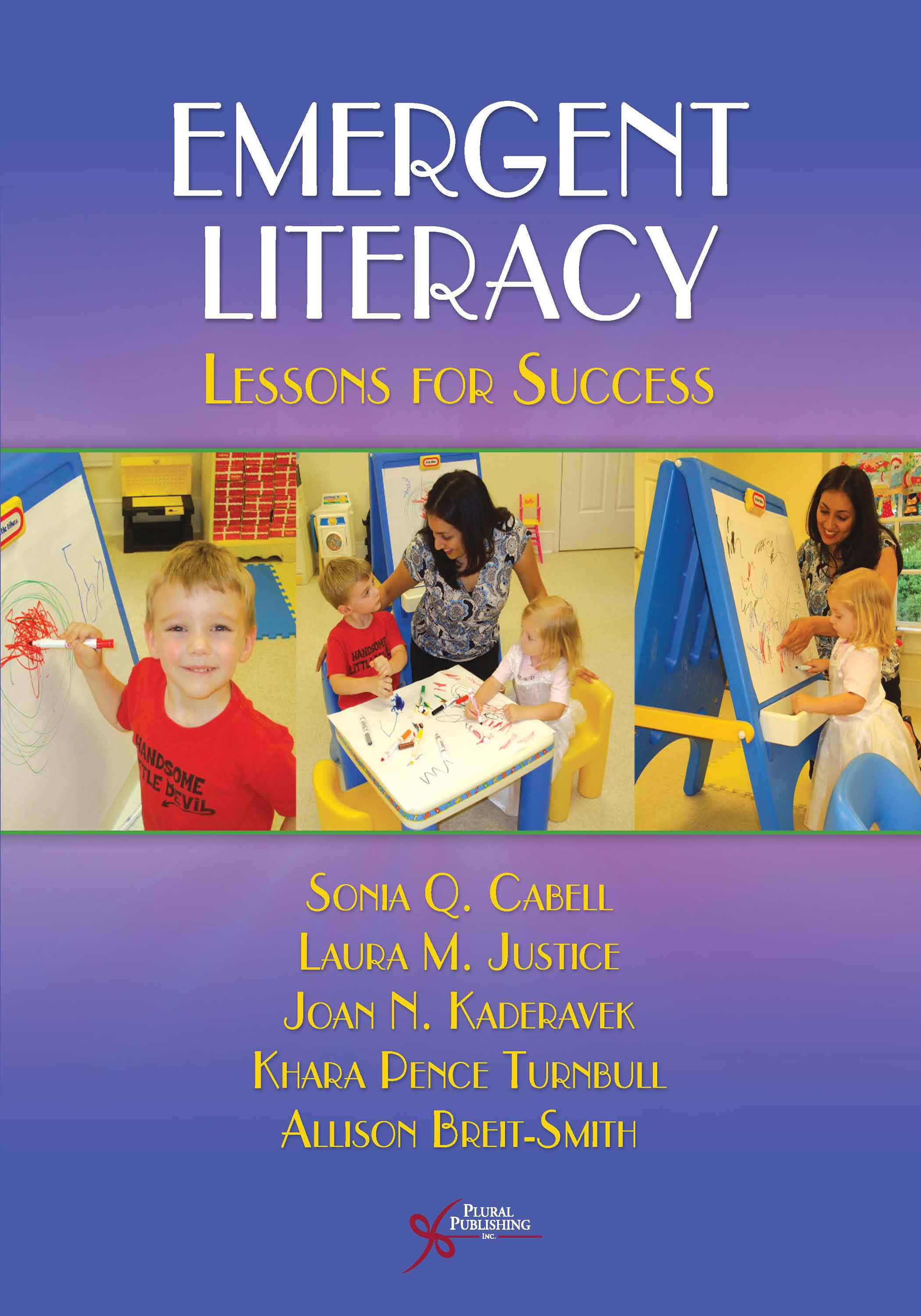
Emergent Literacy: Lessons for Success
First Edition
Sonia Q. Cabell, Laura M. Justice, Joan N. Kaderavek, Khara L.P. Turnbull, Allison Breit-Smith
Details: 165 pages, B&W, Softcover, 8.5" x 11"
ISBN13: 978-1-59756-301-7
© 2009 | Available

Assessment in Emergent Literacy
First Edition
Khara L.P. Turnbull
Details: 549 pages, B&W, Softcover, 6" x 9"
ISBN13: 978-1-59756-097-9
© 2007 | Available

Clinical Approaches to Emergent Literacy Intervention
First Edition
Laura M. Justice
Details: 452 pages, B&W, Softcover, 6" x 9"
ISBN13: 978-1-59756-092-4
© 2006 | Available

The Development of Language
Tenth Edition
Jean Berko Gleason, Nan Bernstein Ratner
Details: 444 pages, Full Color, Softcover, 8.5" x 11"
ISBN13: 978-1-63550-426-2
© 2024 | Available

Introduction to Child Language Disorders: Evidence-Based Assessment and Intervention
First Edition
Shari Robertson, Jennifer L. Schultz, Rachel K. Powell
Details: 484 pages, Full Color, Softcover, 8.5" x 11"
ISBN13: 978-1-63550-789-8
© 2028 | Available